
Every significant change this cycle — article by article, with the program updates each one requires.
Read the guide →De-energize or justify? Walk it block by block — 43 verified 2027 citations. Free, no sign-up.
Walk the decision →Live, instructor-led by Rick Hauf, CSP — see current dates and pricing.
See open seats →70E, OSHA 1910/1926 & the NEC applied to 2N topology, live white space, and facilities that never go down.
Visit MCS ↗
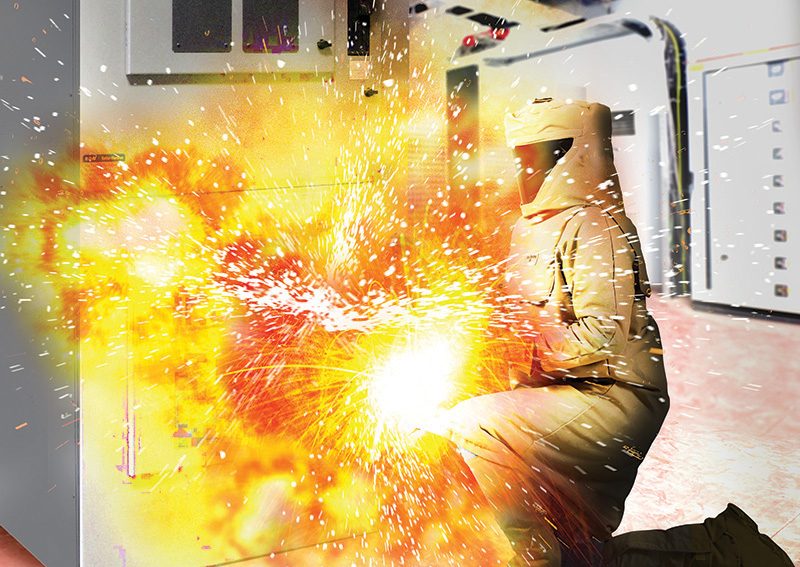
Electrical safety training built for Utah's expanding data center sector, military installations, and defense-related manufacturing — delivered by Certified Safety Professionals with experience in secure, high-criticality facility environments under UOSHA compliance requirements.
Utah has emerged as one of the nation's fastest-growing data center markets, with the Salt Lake City metro and Ogden corridor attracting major colocation and hyperscale investment. The state also hosts significant military installations and Department of Defense-related operations — facilities where electrical workers must hold 2027 NFPA 70E qualifications and where training must often meet additional documentation requirements aligned with DoD and base safety office standards. UOSHA enforces electrical safety requirements for all Utah employers, and 2027 NFPA 70E is the recognized standard for qualified electrical worker training in every environment we serve. Our arc flash training and arc flash safety training programs are built to meet these requirements onsite or virtually. Employers also search for arc flash training in Utah — it is the same 2027 NFPA 70E-compliant program described above, delivered onsite or via live virtual instruction.
2027 NFPA 70E training in Utah is delivered onsite at your facility or live online, taught by a Certified Safety Professional rather than played from a recording. Every session is built on the 2027 edition of NFPA 70E, which has been in effect since May 6, 2026.
Four lengths, chosen by role: 4-Hour Awareness for non-electrical staff who work around energized equipment; 4-Hour QEW Refresher for workers who already hold current 2027 NFPA 70E training; 8-Hour QEW, the full qualified-electrical-worker curriculum; and the 2-Day Intensive QEW with examination. Typical attendees are electricians, maintenance technicians, plant and facility engineers, and the EHS staff who own the electrical safety program.
Utah's low cost of power, favorable climate for cooling, and business-friendly tax environment have made the Salt Lake City-to-Ogden corridor a major U.S. data center destination. These facilities operate critical UPS systems, 480V bus duct, generator paralleling gear, and medium-voltage distribution — all environments requiring 2027 NFPA 70E-trained qualified electrical workers under UOSHA oversight.
Utah hosts significant military and DoD-related operations. Electrical workers at military installations face 2027 NFPA 70E requirements alongside installation-specific safety requirements and often must demonstrate qualifications to base safety officers. We have delivered 2027 NFPA 70E training at defense-related facility environments and understand the documentation and qualification requirements that military installation employers expect.
Utah's defense contractor community — supporting military installations and DoD programs — employs maintenance electricians and facilities technicians who must meet both prime contractor safety standards and UOSHA electrical safety requirements. 2027 NFPA 70E qualification is typically required by both. Our training includes the documentation and record-keeping formats that defense contractor safety managers and prime contractors commonly require for qualification verification.
Utah's rapid population growth drives significant commercial and industrial construction — including data center buildouts, industrial park development, and government facility construction. Electrical contractors on these projects must have qualified workers trained to 2027 NFPA 70E under OSHA 29 CFR 1926 Subpart K, and UOSHA enforces these standards on Utah job sites.
Utah's manufacturing base — including aerospace component manufacturing, food and beverage processing, and medical device production — operates 480V and 4.16kV systems where arc flash hazard analysis and qualified worker training are required under UOSHA enforcement. Defense-related manufacturing facilities face an additional layer of contractor safety requirements that 2027 NFPA 70E qualification helps satisfy.
Utah's electric utilities, renewable energy facilities, and natural gas operations employ qualified electrical workers who must meet OSHA 1910.269 requirements and 2027 NFPA 70E qualification standards enforced under UOSHA oversight. Utah's growing renewable energy sector — including utility-scale solar — adds substantial medium-voltage infrastructure to the state's electrical worker training requirements.
Utah operates under UOSHA — the Utah Occupational Safety and Health division — an OSHA-approved State Plan program. UOSHA enforces electrical safety standards at least as stringent as federal requirements, including 29 CFR 1910 Subpart S for general industry and 29 CFR 1926 Subpart K for construction. 2027 NFPA 70E is the consensus standard UOSHA references during electrical safety inspections and enforcement actions for qualified electrical worker training.
For military installation employers and DoD contractors operating in Utah, 2027 NFPA 70E qualification is often required by installation safety offices in addition to UOSHA enforcement. Base safety officers and prime contractors routinely ask for documentation that demonstrates qualified electrical worker status — including signed training records, written assessment results, and certificates of completion that identify the training standard covered and the date of training.
Every training program we deliver in Utah is designed to satisfy UOSHA inspection expectations and, where applicable, military installation documentation requirements. We cover the qualification recordkeeping formats that both UOSHA compliance officers and DoD facility safety managers look for during reviews.
Utah runs its own OSHA State Plan — UOSH, under the Utah Labor Commission — covering private-sector and state and local government employers. State Plan states have to be at least as effective as federal OSHA, and the inspection you get is a state inspection, with state citations and a state appeals process.
Licensing is separate from all of that. The Division of Professional Licensing issues journeyman and master electrician licenses and requires continuing education at renewal. A current DOPL license says a worker met the state’s trade competency bar; it does not document that their employer trained them on the electrical safety program they are working under.
Rocky Mountain Power carries most of the distribution. The heavy industrial load sits west and south of Salt Lake — the Rio Tinto Kennecott copper operation in the Oquirrhs, the refinery cluster along the north end of the valley, and the mining and processing operations in Carbon and Emery counties.
Those are continuous-process sites. Their electrical work happens inside planned outage windows that are scheduled months out, and the training that has to precede that work gets scheduled against the same calendar.
Both formats are delivered onsite at your Utah facility by CSP-credentialed instructors. Curriculum incorporates scenarios specific to data center environments, military and defense facility operations, and Utah's manufacturing and industrial sector.
Full 2027 NFPA 70E curriculum. Arc flash hazard analysis, PPE selection and inspection, energized electrical work permits, lockout/tagout procedures, and group exercises built around facility-specific scenarios including data center critical power systems and military and defense facility electrical environments.
The core qualification course for electricians, maintenance personnel, and technicians who work on or near energized equipment at 50 volts or more. Covers shock and arc flash hazard identification, risk assessment, establishing an electrically safe work condition, energized work permits, PPE selection using the 2027 NFPA 70E tables, test instrument use, and lockout/tagout.
Condensed review of 2027 NFPA 70E changes for workers with prior training. Focuses on documentation requirements, energized work permit currency, and UOSHA compliance priorities for data center, military, and defense facility environments. Qualification records and certificates of completion provided for recordkeeping by UOSHA standards and installation safety offices.
Hazard recognition and boundary awareness for employees who work near — but never on — energized electrical equipment: operators, general maintenance, facilities staff, and other personnel who need to understand the risk without performing electrical work themselves.
Live, instructor-led classes to the 2027 edition — reserve individual seats, or bring us onsite for your whole team.
The 2027 edition — in effect since May 6, 2026 — tightens several requirements employers should know about. Highlights include a new requirement for an additional person trained in emergency response whenever the energized work permit calls for shock or arc flash PPE, a stronger expectation that the emergency response plan is settled before a panel is ever opened, job briefings that cover the specific task’s hazards and required PPE, and a management-of-change expectation that incident-energy analyses are reviewed whenever the electrical system changes — not just on a fixed calendar. Every class we teach is built on the 2027 edition.
Yes. We have experience delivering 2027 NFPA 70E training at defense-related facilities. We work with facility safety officers to meet installation-specific documentation and qualification requirements — including sign-in documentation, training records, and any base-specific formats needed for qualification verification. Our certificates of completion identify the training standard, date, and instructor credentials in a format that base safety offices and prime contractors routinely accept.
UOSHA enforces electrical safety standards equivalent to Federal OSHA 29 CFR 1910 Subpart S, which incorporates 2027 NFPA 70E as the recognized consensus standard for arc flash and electrical safety. Data center employers with qualified workers performing electrical maintenance under UOSHA jurisdiction are expected to have 2027 NFPA 70E-compliant training programs. UOSHA inspectors reference 2027 NFPA 70E during enforcement actions and expect employers to demonstrate current qualified worker documentation, PPE programs, and energized work permit procedures.
All sessions are capped at 20 participants to ensure quality instruction and meaningful group exercise engagement. For larger teams, we can schedule multiple sessions. This is also practical for shift workers at data centers and defense facilities who may need training across different work schedules.
We respond to every inquiry within 24 hours. Contact us with your location, workforce size, and facility type — we'll build a training program around your specific UOSHA compliance requirements and, where applicable, military installation qualification documentation needs.
Onsite or private virtual — scheduled around your shift, delivered to your whole crew at once, at direct-client rates. No open-enrollment seat limits.