NETWORKMCS ↗
Start here
HomeOnsite TrainingVirtual TrainingFull class schedule
2027 Guide
2027 Implementation GuideGuide home
Look it up · tools
SafePath · Decision TreeArc Flash BoundaryPPE Category SelectorArc Flash GlovesEnergized Work PermitOSHA–70E CrosswalkESP BuilderESP Gap Assessment
For your company
Onsite / private groupMeet your instructor
By industry
Data CentersSolar & RenewablesManufacturingUtilitiesOil & GasHealthcareAll industries…
By state
TexasCaliforniaFloridaGeorgiaIllinoisMichiganNew YorkNorth CarolinaOhioPennsylvaniaAll states…
Reference
FAQToolbox TalksDownloadsContact
Network
MissionCriticalSafety.org ↗
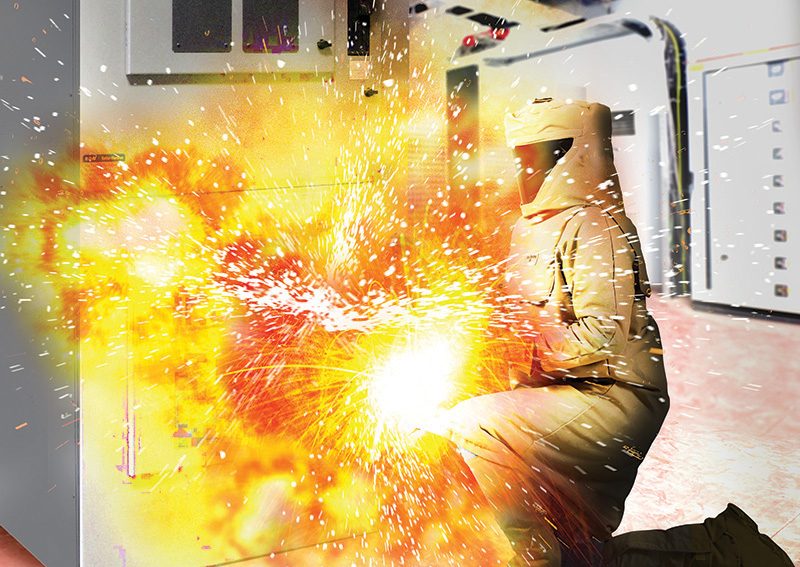
Arc flash hazard in Michigan industrial facility — 2027 NFPA 70E electrical safety training
2027 NFPA 70E Training — Michigan

2027 NFPA 70E Arc Flash Training for
Michigan’s Automotive Assembly Plants

Onsite and virtual electrical safety training built for the hazards of Michigan automotive assembly plants, advanced manufacturing, chemical processing, and utility operations — led by Certified Safety Professionals with 35+ years of field experience.

Read the Michigan compliance guide →

Upcoming Virtual, Instructor-Led Classes
Open Enrollment
Class
Date
Time
Seats
Status
Enroll
8-Hour NFPA 70E Electrical Safety
Qualified Electrical Worker - Live, Virtual
Sep 15
8:00 AM–4:30 PM EST
10 open
OPEN
Enroll
4-Hour NFPA 70E Electrical Safety
Qualified Electrical Worker Refresher - Live, Virtual
Sep 17
8:00 AM–12:00 PM EST
9 open
OPEN
Enroll
4-Hour NFPA 70E Electrical Safety
Qualified Electrical Worker Refresher - Live, Virtual
Sep 17
1:00 PM–5:00 PM EST
7 open
OPEN
Enroll
8-Hour NFPA 70E Electrical Safety
Qualified Electrical Worker - Live, Virtual
Sep 22
8:00 AM–4:30 PM EST
13 open
OPEN
Enroll
Have 15+ people? Book a private day →

Michigan is home to the nation’s largest concentration of automotive assembly and advanced manufacturing operations, along with major chemical processing facilities and a growing electric vehicle and battery production sector. High-voltage motor control centers, robotic assembly line switchgear, and complex plant PDU configurations demand electrical safety training that goes beyond generic compliance. We deliver 2027 NFPA 70E training built specifically for the work Michigan qualified electrical workers actually do. Employers also search for arc flash training in Michigan — it is the same 2027 NFPA 70E-compliant program described above, delivered onsite or via live virtual instruction.

Training Built for Michigan’s Most Demanding Electrical Environments

Every industry sector in Michigan carries its own electrical hazard profile. We build curriculum around the specific equipment, voltage levels, and facility types your workers encounter every day.

Oil & Gas Operations

Michigan’s Antrim Shale natural gas play and northern Lower Peninsula oil production rely on wellhead electrical systems, compressor stations, and pipeline pump facilities. Workers face arc flash exposure during maintenance of gathering system electrical equipment where lockout/tagout failures are life-threatening.

Petrochemical & Refining

Marathon’s Detroit refinery and Dow’s integrated chemical complex in Midland operate 480V to 15kV distribution systems, large rotating equipment, and classified electrical areas. Arc flash incident energy levels in refinery and chemical plant switchgear rooms routinely exceed 40 cal/cm².

Construction & Utilities

Michigan’s surge in EV and battery plant construction — from new battery park projects to expanding assembly facilities — creates unique 2027 NFPA 70E/OSHA 29 CFR 1926 Subpart K intersections. Electrical contractors building out new manufacturing capacity must navigate both general industry and construction electrical safety standards simultaneously.

Municipalities & Public Utilities

Municipal electrical utilities such as Lansing Board of Water & Light and Michigan’s investor-owned distribution networks require training on switchgear up to 15kV, transformer maintenance, and OSHA 29 CFR 1910.269 compliance alongside 2027 NFPA 70E.

Data Centers

Michigan’s expanding data center footprint — including new hyperscale investment in West Michigan and the Detroit metro — operates critical UPS systems, 480V bus duct, and generator switchgear requiring trained qualified electrical workers for live work justification and energized electrical work permits.

Manufacturing

Michigan manufacturing facilities, including automotive assembly, precision machining, and battery cell production, run complex 480V and 4.16kV distribution systems where arc flash studies and qualified worker training are required under MIOSHA and OSHA General Duty Clause obligations.

Michigan & MIOSHA: What Employers Must Know

Michigan operates its own OSHA-approved State Plan — MIOSHA (Michigan Occupational Safety and Health Administration) — covering both private and public sector employers statewide. MIOSHA standards must be at least as effective as federal OSHA requirements, and Michigan has adopted electrical safety rules consistent with 29 CFR 1910 Subpart S that are enforced with 2027 NFPA 70E as the recognized industry method.

MIOSHA’s General Industry Safety Standards require employers to protect workers from recognized hazards — and arc flash is explicitly recognized. Training qualified electrical workers to 2027 NFPA 70E standards is the most defensible compliance posture available to Michigan employers, particularly given MIOSHA’s active enforcement presence in manufacturing and chemical processing facilities.

For automotive and battery manufacturing operations, the intersection of MIOSHA electrical standards and complex plant-floor electrical distribution creates a layered compliance obligation that demands training tailored to each facility’s specific hazard categories, PPE ratings, and written safety procedures.

MIOSHA State Plan
Michigan Jurisdiction
29 CFR 1910 Subpart S
MIOSHA-Adopted Standard
2027 NFPA 70E
Recognized Industry Standard
Energized Work Permit Required
For Live Electrical Work

A state-plan state with statewide licensing — and MIOSHA asks its own questions

Michigan checks both boxes most states split: journeyman and master electricians and electrical contractors are licensed statewide through LARA, and workplace safety is enforced by the state itself under MIOSHA rather than federal OSHA. MIOSHA runs its own general-industry electrical safety standards and its own inspection priorities — an out-of-state program built purely on the federal citations can miss how Michigan actually enforces.

The practical documentation ask is the same, though: the license proves the trade, the employer’s training record proves the safety qualification, and MIOSHA inspectors ask for the record.

DTE Energy carries the southeast and Consumers Energy most of the rest of the Lower Peninsula, with smaller utilities and co-ops across the UP. The exposure is concentrated where the state’s identity is: automotive assembly and stamping across metro Detroit and the I-75/I-96 corridors, the battery and EV investments around Lansing and beyond, the Grand Rapids manufacturing base, and mining in the Upper Peninsula.

Auto plants train to the production calendar — and the production calendar has two famous gaps: the summer changeover weeks and the year-end holiday shutdown, when maintenance electricians are on site but the lines are not running.

Scheduling note: The July changeover and late-December shutdown are the natural onsite windows for automotive and supplier plants — book them early, because every vendor wants the same weeks. For UP sites, treat January–March travel as weather-contingent or run those cohorts virtually.

We Deliver Arc Flash Training Across Michigan

Onsite delivery to your facility, anywhere in the state

Detroit Grand Rapids Warren Sterling Heights Ann Arbor Lansing Flint Dearborn Kalamazoo Saginaw

Choose the Right Program for Your Workforce

Both formats are available onsite at your facility or virtually via Zoom or Microsoft Teams. All sessions are led live by a Certified Safety Professional.

Most Comprehensive

Intensive Qualified Electrical Worker with Examination

Full 2027 NFPA 70E curriculum covering the 2027 NFPA 70E classroom training requirements for electrical workers in automotive, chemical processing, utility, and manufacturing environments.

  • Complete 2027 NFPA 70E standard coverage
  • Hazard identification and risk assessment methodology
  • Arc flash incident energy and PPE category selection
  • Arc flash study interpretation and label reading
  • Energized electrical work permits
  • Lockout/tagout and electrical safe work practices
  • Group exercises and scenario-based application
  • MIOSHA and OSHA 29 CFR 1910 Subpart S / 1926 Subpart K coverage
Maximum 20 participants per session

Best for: Initial qualification or triennial retraining of electrical workers in automotive and advanced manufacturing settings.

Request a Quote
Core Qualification

8-Hour — Qualified Electrical Worker (QEW)

The core qualification course for electricians, maintenance personnel, and technicians who work on or near energized equipment at 50 volts or more — covering hazard identification, PPE selection, and safe work practices in a single working day.

  • Shock and arc flash hazard identification and risk assessment
  • PPE selection using the 2027 NFPA 70E tables
  • Establishing an electrically safe work condition
  • Energized electrical work permits
  • Test instrument use and verification
  • Lockout/tagout and OSHA 1910/1926 requirements
  • Scenario-based application exercises
Maximum 20 participants per session

Best for: Initial qualification of electricians, maintenance technicians, and other workers who perform hands-on electrical work.

Request a Quote
Refresher

4-Hour — QEW Refresher

Condensed review for workers with prior 2027 NFPA 70E training, covering 2027 edition changes, regulatory updates, and reinforcement of core electrical safety practices.

  • 2027 NFPA 70E edition changes and updates
  • Regulatory changes affecting Michigan employers
  • Risk assessment and PPE selection review
  • Energized work permit requirements
  • Incident energy analysis refresher
  • Group discussion and scenario review
Maximum 20 participants per session

Best for: Annual compliance refreshers at automotive plants, chemical facilities, and utility operations.

Request a Quote
Awareness

4-Hour — Electrical Safety Awareness

Hazard recognition and boundary awareness for employees who work near — but never on — energized electrical equipment: operators, general maintenance, facilities staff, and other personnel who need to understand the risk without performing electrical work themselves.

  • Arc flash and shock hazard awareness
  • Recognizing energized equipment and warning labels
  • Approach boundaries — what they mean and why they matter
  • Unqualified worker limitations under 2027 NFPA 70E
  • Lockout/tagout awareness — what to expect and never bypass
  • When and how to report electrical hazards
Maximum 20 participants per session

Best for: Operators, facilities staff, and other unqualified personnel who work near energized equipment but do not perform electrical work.

Request a Quote

Upcoming Open-Enrollment 2027 NFPA 70E Classes in Michigan

Live, instructor-led classes to the 2027 edition — reserve individual seats, or bring us onsite for your whole team.

The 2027 edition changed what a qualified worker has to be trained on. See what changed in the 2027 NFPA 70E edition — and what it means for Michigan employers preparing crews this year.

Common Questions About Michigan 2027 NFPA 70E Training

Answers to the questions Michigan safety managers and EHS directors ask most often.

What’s new in the 2027 edition of NFPA 70E?

The 2027 edition — in effect since May 6, 2026 — tightens several requirements employers should know about. Highlights include a new requirement for an additional person trained in emergency response whenever the energized work permit calls for shock or arc flash PPE, a stronger expectation that the emergency response plan is settled before a panel is ever opened, job briefings that cover the specific task’s hazards and required PPE, and a management-of-change expectation that incident-energy analyses are reviewed whenever the electrical system changes — not just on a fixed calendar. Every class we teach is built on the 2027 edition.

Does MIOSHA require 2027 NFPA 70E training for Michigan manufacturing workers?

MIOSHA does not explicitly cite 2027 NFPA 70E by name in its General Industry Safety Standards, but enforcement uses it as the recognized industry consensus standard for electrical safety. Employers who follow 2027 NFPA 70E have the strongest available defense in a MIOSHA electrical safety citation or investigation. In incidents involving electrical hazards at Michigan manufacturing facilities, 2027 NFPA 70E compliance is routinely used to evaluate whether an employer took adequate precautions to protect workers from recognized arc flash hazards.

Can training be delivered onsite at our Michigan facility?

Yes. We routinely deliver training at operating automotive plants, chemical facilities, and manufacturing operations across the Detroit metro, West Michigan, and mid-Michigan corridor. We build the curriculum around your facility’s specific equipment, hazard categories, and PPE inventory. Before each engagement we review your arc flash study, one-line diagrams (where available), and existing electrical safety program to ensure the training addresses the actual hazards your workers face on the floor.

How many participants per session?

We cap all sessions at 20 participants to ensure every worker receives individual attention and meaningful engagement with the material. Smaller group sizes produce measurably better outcomes — reflected in our 9.46/10 participant rating. If your workforce requires training for more than 20 workers, we schedule additional sessions at your facility rather than exceeding the cap.

Schedule 2027 NFPA 70E Training for Your Michigan Facility

We respond to every inquiry within 24 hours. Tell us your location, workforce size, and industry and we’ll build a program around your specific hazards and schedule.