NETWORKMCS ↗
Start here
HomeOnsite TrainingVirtual TrainingFull class schedule
2027 Guide
2027 Implementation GuideGuide home
Look it up · tools
SafePath · Decision TreeArc Flash BoundaryPPE Category SelectorArc Flash GlovesEnergized Work PermitOSHA–70E CrosswalkESP BuilderESP Gap Assessment
For your company
Onsite / private groupMeet your instructor
By industry
Data CentersSolar & RenewablesManufacturingUtilitiesOil & GasHealthcareAll industries…
By state
TexasCaliforniaFloridaGeorgiaIllinoisMichiganNew YorkNorth CarolinaOhioPennsylvaniaAll states…
Reference
FAQToolbox TalksDownloadsContact
Network
MissionCriticalSafety.org ↗
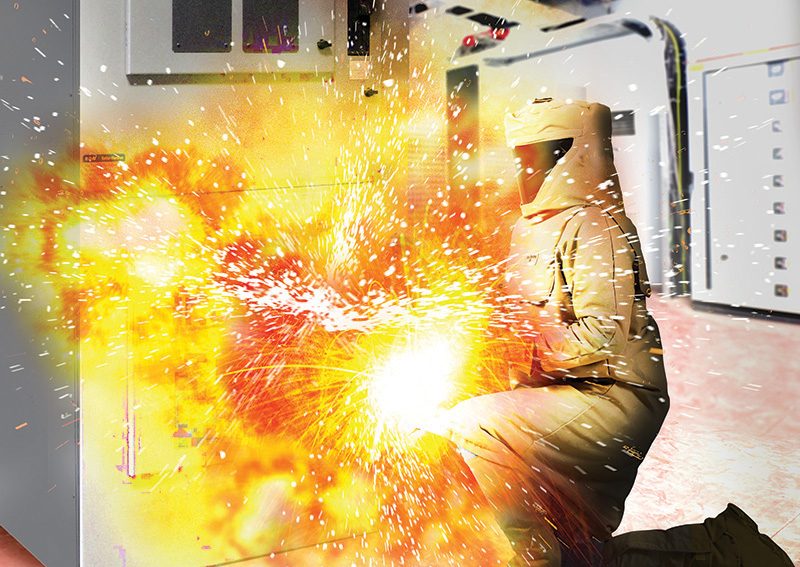
Arc flash hazard in California industrial facility — 2027 NFPA 70E electrical safety training
2027 NFPA 70E Training — California

2027 NFPA 70E Training for
California’s Refineries & Data Centers

Onsite and virtual electrical safety training built for the hazards of California refining and petrochemical operations, Silicon Valley data centers, utility grid construction, and advanced manufacturing — led by Certified Safety Professionals with 35+ years of field experience.

Read the California compliance guide →

Upcoming Virtual, Instructor-Led Classes
Open Enrollment
Class
Date
Time
Seats
Status
Enroll
8-Hour NFPA 70E Electrical Safety
Qualified Electrical Worker - Live, Virtual
Sep 15
8:00 AM–4:30 PM EST
10 open
OPEN
Enroll
4-Hour NFPA 70E Electrical Safety
Qualified Electrical Worker Refresher - Live, Virtual
Sep 17
8:00 AM–12:00 PM EST
9 open
OPEN
Enroll
4-Hour NFPA 70E Electrical Safety
Qualified Electrical Worker Refresher - Live, Virtual
Sep 17
1:00 PM–5:00 PM EST
7 open
OPEN
Enroll
8-Hour NFPA 70E Electrical Safety
Qualified Electrical Worker - Live, Virtual
Sep 22
8:00 AM–4:30 PM EST
13 open
OPEN
Enroll
Have 15+ people? Book a private day →

California is home to the third-largest refining capacity in the country, one of the densest hyperscale data center corridors in the country, and the largest municipally owned electric utility in the United States — and the electrical hazards that come with all three. High-voltage switchgear rooms, dense UPS and generator installations, and aggressive Cal/OSHA enforcement demand electrical safety training that goes beyond generic compliance. We deliver 2027 NFPA 70E training built specifically for the work California qualified electrical workers actually do. Employers also search for arc flash training in California — it is the same 2027 NFPA 70E-compliant program described above, delivered onsite or via live virtual instruction.

Training Built for California’s Most Demanding Electrical Environments

Every industry sector in California carries its own electrical hazard profile. We build curriculum around the specific equipment, voltage levels, and classified locations your workers encounter every day.

Oil & Gas Operations

Kern County and Bakersfield oil fields, along with legacy production across the Los Angeles Basin, run well-site electrical systems and artificial-lift equipment inside hazardous (classified) locations under NEC Article 500. Workers face arc flash exposure during routine maintenance of pumping units and wellhead controllers where lockout/tagout failures are life-threatening.

Petrochemical & Refining

California has the third-largest refining capacity in the nation — Chevron El Segundo, Marathon Martinez, Valero Benicia, PBF Torrance and Martinez, and Phillips 66’s Los Angeles and Carson facilities all operate continuous-process electrical systems. Switchgear rooms at these sites routinely present high incident-energy exposure that demands rigorous PPE selection and energized work controls.

Construction & Utilities

PG&E, Southern California Edison, and SDG&E transmission and distribution work — including large-scale wildfire-hardening grid construction — sits at the intersection of Title 8 CCR and 2027 NFPA 70E requirements. Electrical contractors on utility hardening projects must navigate both state electrical safety orders and national consensus standards simultaneously.

Municipalities & Public Utilities

LADWP, the largest municipally owned utility in the United States, along with SMUD and dozens of California municipal water and electric agencies, require training on switchgear up to 15kV, transformer maintenance, and OSHA 29 CFR 1910.269 compliance alongside 2027 NFPA 70E and Title 8 Electrical Safety Orders.

Data Centers

The Silicon Valley and Santa Clara hyperscale data center corridor is one of the densest data center markets in the world, running massive UPS, generator, and switchgear installations. Qualified electrical workers in this corridor need rigorous training for live work justification and energized electrical work permits under both 2027 NFPA 70E and Cal/OSHA requirements.

Manufacturing

California manufacturing spans aerospace facilities such as SpaceX Hawthorne and Boeing, semiconductor fabrication plants, Tesla’s Fremont assembly plant, and advanced manufacturing statewide — all running complex 480V and medium-voltage distribution systems where arc flash studies and qualified worker training are required under Title 8 and the OSHA General Duty Clause.

California & Cal/OSHA: What Employers Must Know

California operates its own federally approved OSHA State Plan, administered by the Division of Occupational Safety and Health — commonly known as Cal/OSHA. Electrical employers in California are governed by Title 8 of the California Code of Regulations, which includes its own Electrical Safety Orders that are, in many respects, more stringent than the federal 29 CFR 1910 requirements employers in most other states follow. Cal/OSHA is also widely recognized for aggressive, well-resourced enforcement, making documented compliance a priority for every California employer with energized electrical equipment.

Even though Title 8 has its own specific electrical rules, Cal/OSHA inspectors and hearing officers routinely look to 2027 NFPA 70E as the recognized industry practice for hazard identification, incident energy analysis, and PPE selection. Employers who train their workforce to 2027 NFPA 70E standards build a compliance record that satisfies Title 8’s general requirements while also meeting the more detailed, facility-specific hazard assessment expectations Cal/OSHA inspectors look for during enforcement visits.

California’s refining sector adds another layer of complexity: electrical safety work at refineries and petrochemical plants must be coordinated with Cal/OSHA’s Process Safety Management program, since energized work permits, lockout/tagout procedures, and management-of-change requirements overlap directly with PSM-covered processes. Utilities engaged in wildfire-mitigation grid construction face a similar overlap, where Title 8 electrical safety orders intersect with utility-specific vegetation management and public safety power shutoff protocols. Both scenarios require training that addresses the full regulatory picture, not just the electrical safety order in isolation.

Cal/OSHA
State-Plan Jurisdiction
Title 8 CCR
Electrical Safety Orders
2027 NFPA 70E
Recognized Industry Practice
Energized Work Permit Required
For Live Electrical Work

One of the most documented electrical safety regimes in the country

California is a State Plan state, and Cal/OSHA does not simply mirror the federal standards. The Title 8 Electrical Safety Orders are California’s own, and in several places they are more prescriptive than their federal equivalents. Employers who arrive from out of state with a federally-built program routinely find gaps in it.

California is also unusual in licensing the individual. Beyond the Contractors State License Board’s C-10 electrical contractor license, the Department of Industrial Relations certifies individual electricians employed by C-10 contractors, with its own examination and continuing-education requirement. Two separate credentials, two separate renewal clocks, and neither one is the employer’s training record.

The utility landscape is Pacific Gas & Electric, Southern California Edison and San Diego Gas & Electric on the investor-owned side, plus large municipals in SMUD and LADWP. Downstream there is the Bay Area and Los Angeles basin refining complex, the Central Valley food-processing and agricultural pumping load, and a fast-growing data center footprint inland.

Cal/OSHA’s documentation expectations are the practical difference. Inspectors ask to see the written program, the training records and the dates — and they ask early in the inspection, not at the end.

Scheduling note: Public Safety Power Shutoff events and wildfire-season staffing are the two things that move California training dates. Utility and utility-contractor crews get pulled into hardening and patrol work from roughly June through the first significant rain, so aim for late winter and spring where the work allows it.

We Deliver Arc Flash Training Across California

Onsite delivery to your facility, anywhere in the state

Los Angeles San Francisco Bay Area San Diego Sacramento San Jose–Silicon Valley Fresno Bakersfield Long Beach Oakland Riverside–San Bernardino

Choose the Right Program for Your Workforce

Both formats are available onsite at your facility or virtually via Zoom or Microsoft Teams. All sessions are led live by a Certified Safety Professional.

Most Comprehensive

Intensive Qualified Electrical Worker with Examination

Full 2027 NFPA 70E curriculum covering the 2027 NFPA 70E classroom training requirements for electrical workers in refining, petrochemical, data center, and manufacturing environments.

  • Complete 2027 NFPA 70E standard coverage
  • Hazard identification and risk assessment methodology
  • Arc flash incident energy and PPE category selection
  • Arc flash study interpretation and label reading
  • Energized electrical work permits
  • Lockout/tagout and electrical safe work practices
  • Group exercises and scenario-based application
  • Title 8 CCR Electrical Safety Orders and Cal/OSHA compliance coverage
Maximum 20 participants per session

Best for: Initial qualification or triennial retraining of electrical workers in refining, petrochemical, and data center facilities.

Request a Quote
Core Qualification

8-Hour — Qualified Electrical Worker (QEW)

The core qualification course for electricians, maintenance personnel, and technicians who work on or near energized equipment at 50 volts or more — covering hazard identification, PPE selection, and safe work practices in a single working day.

  • Shock and arc flash hazard identification and risk assessment
  • PPE selection using the 2027 NFPA 70E tables
  • Establishing an electrically safe work condition
  • Energized electrical work permits
  • Test instrument use and verification
  • Lockout/tagout and OSHA 1910/1926 requirements
  • Scenario-based application exercises
Maximum 20 participants per session

Best for: Initial qualification of electricians, maintenance technicians, and other workers who perform hands-on electrical work.

Request a Quote
Refresher

4-Hour — QEW Refresher

Condensed review for workers with prior 2027 NFPA 70E training, covering 2027 edition changes, regulatory updates, and reinforcement of core electrical safety practices.

  • 2027 NFPA 70E edition changes and updates
  • Regulatory changes affecting California employers
  • Risk assessment and PPE selection review
  • Energized work permit requirements
  • Incident energy analysis refresher
  • Group discussion and scenario review
Maximum 20 participants per session

Best for: Annual compliance refreshers at refineries, municipal utilities, and Silicon Valley data center operations.

Request a Quote
Awareness

4-Hour — Electrical Safety Awareness

Hazard recognition and boundary awareness for employees who work near — but never on — energized electrical equipment: operators, general maintenance, facilities staff, and other personnel who need to understand the risk without performing electrical work themselves.

  • Arc flash and shock hazard awareness
  • Recognizing energized equipment and warning labels
  • Approach boundaries — what they mean and why they matter
  • Unqualified worker limitations under 2027 NFPA 70E
  • Lockout/tagout awareness — what to expect and never bypass
  • When and how to report electrical hazards
Maximum 20 participants per session

Best for: Operators, facilities staff, and other unqualified personnel who work near energized equipment but do not perform electrical work.

Request a Quote

Upcoming Open-Enrollment 2027 NFPA 70E Classes in California

Live, instructor-led classes to the 2027 edition — reserve individual seats, or bring us onsite for your whole team.

The 2027 edition changed what a qualified worker has to be trained on. See what changed in the 2027 NFPA 70E edition — and what it means for California employers preparing crews this year.

Common Questions About California 2027 NFPA 70E Training

Answers to the questions California safety managers and EHS directors ask most often.

What’s new in the 2027 edition of NFPA 70E?

The 2027 edition — in effect since May 6, 2026 — tightens several requirements employers should know about. Highlights include a new requirement for an additional person trained in emergency response whenever the energized work permit calls for shock or arc flash PPE, a stronger expectation that the emergency response plan is settled before a panel is ever opened, job briefings that cover the specific task’s hazards and required PPE, and a management-of-change expectation that incident-energy analyses are reviewed whenever the electrical system changes — not just on a fixed calendar. Every class we teach is built on the 2027 edition.

Does Cal/OSHA require 2027 NFPA 70E training, or is that a federal-only requirement?

California operates its own OSHA-approved State Plan, and Cal/OSHA’s Title 8 California Code of Regulations includes its own Electrical Safety Orders that are often more stringent than the federal standards employers in non-state-plan states follow. Title 8 does not mandate 2027 NFPA 70E by name, but Cal/OSHA inspectors and hearing officers consistently treat 2027 NFPA 70E as the recognized industry practice for hazard assessment, incident energy analysis, and PPE selection. Employers who train to 2027 NFPA 70E build a strong, well-documented compliance record under both Title 8 and California’s well-documented aggressive enforcement posture.

Can training be delivered onsite at our refinery or data center facility?

Yes. We routinely deliver training at operating refineries, petrochemical plants, and hyperscale data center facilities across California, from the Bay Area and Silicon Valley to the Los Angeles Basin and Central Valley. We build the curriculum around your facility’s specific equipment, hazard categories, and PPE inventory. Before each engagement we review your arc flash study, one-line diagrams (where available), and existing electrical safety program to ensure the training addresses the actual hazards your workers face on the floor.

How many participants per session?

We cap all sessions at 20 participants to ensure every worker receives individual attention and meaningful engagement with the material. Smaller group sizes produce measurably better outcomes — reflected in our 9.46/10 participant rating. If your workforce requires training for more than 20 workers, we schedule additional sessions at your facility rather than exceeding the cap.

Schedule 2027 NFPA 70E Training for Your California Facility

We respond to every inquiry within 24 hours. Tell us your location, workforce size, and industry and we’ll build a program around your specific hazards and schedule.