
Every significant change this cycle — article by article, with the program updates each one requires.
Read the guide →De-energize or justify? Walk it block by block — 43 verified 2027 citations. Free, no sign-up.
Walk the decision →Live, instructor-led by Rick Hauf, CSP — see current dates and pricing.
See open seats →70E, OSHA 1910/1926 & the NEC applied to 2N topology, live white space, and facilities that never go down.
Visit MCS ↗
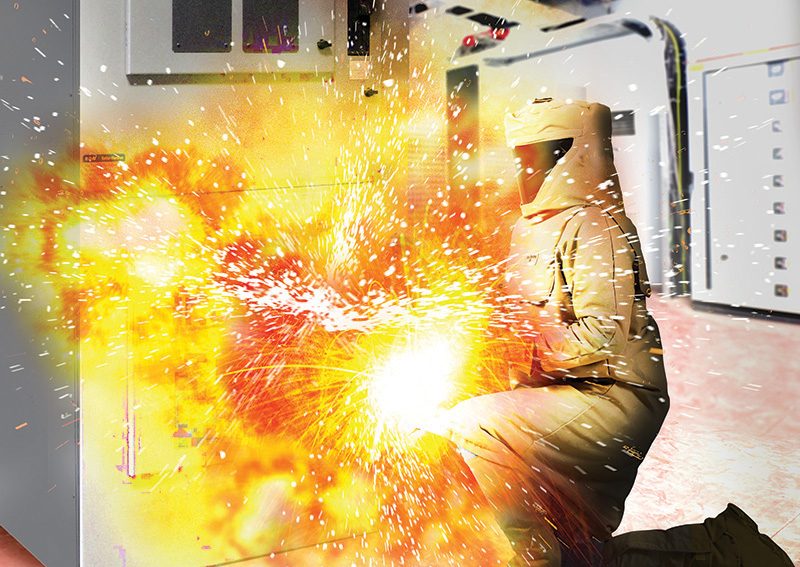
Onsite and virtual electrical safety training built for the hazards of Rhode Island’s marine and advanced manufacturing sector, offshore wind interconnection infrastructure, and utility operations — led by Certified Safety Professionals with 35+ years of field experience.
Rhode Island’s compact footprint holds an outsized concentration of advanced manufacturing, marine industry, and offshore wind infrastructure. High-voltage interconnection equipment supporting Block Island Wind Farm and Revolution Wind, precision fastener and submarine module manufacturing at Quonset Point, and Providence Harbor terminal operations all demand electrical safety training that goes beyond generic compliance. We deliver 2027 NFPA 70E training built specifically for the work Rhode Island qualified electrical workers actually do. Employers also search for arc flash training in Rhode Island — it is the same 2027 NFPA 70E-compliant program described above, delivered onsite or via live virtual instruction.
Every industry sector in Rhode Island carries its own electrical hazard profile. We build curriculum around the specific equipment, voltage levels, and classified locations your workers encounter every day.
Rhode Island has no oil or gas production, but Providence Harbor is a major New England petroleum import point. Bulk fuel storage terminals and natural gas distribution infrastructure statewide present classified-location and high-voltage switching hazards for maintenance crews.
Rhode Island has no petroleum refineries, but Providence Harbor tank farm and terminal operations, along with the state’s specialty chemical and plastics manufacturers, run 480V to 15kV distribution systems with meaningful arc flash exposure.
Offshore wind buildout — including Revolution Wind and the interconnection infrastructure supporting the Block Island Wind Farm at Quonset Point — along with Rhode Island Energy transmission and distribution upgrades, create unique 2027 NFPA 70E/OSHA 29 CFR 1926 Subpart K intersections.
Municipal utilities and the Narragansett Bay Commission’s water and wastewater treatment infrastructure require training on switchgear up to 15kV, transformer maintenance, and OSHA 29 CFR 1910.269 compliance alongside 2027 NFPA 70E.
Rhode Island’s regional colocation and enterprise data center facilities serving the Providence metro and southeastern New England operate UPS systems, 480V bus duct, and generator switchgear requiring trained qualified electrical workers for energized electrical work permits.
Quonset Point’s advanced manufacturing base — including submarine hull module fabrication and precision aerospace fastener production — runs complex 480V distribution systems where arc flash studies and qualified worker training are required under the OSHA General Duty Clause.
Rhode Island operates under Federal OSHA — there is no Rhode Island State Plan. Employers in manufacturing (29 CFR 1910 Subpart S), construction (29 CFR 1926 Subpart K), and utilities (29 CFR 1910.269) are all subject to federal electrical safety standards enforced through Subpart S and the General Duty Clause, for which 2027 NFPA 70E is the recognized industry method.
The OSHA General Duty Clause (Section 5(a)(1)) requires employers to protect workers from recognized hazards — and arc flash is explicitly recognized. Training qualified electrical workers to 2027 NFPA 70E standards is the most defensible compliance posture available to Rhode Island employers.
For Quonset Point’s advanced manufacturing operations and the state’s emerging offshore wind interconnection infrastructure, the intersection of OSHA 1910 Subpart S electrical standards and facility-specific hazard categories creates a compliance obligation that demands training tailored to each site’s equipment, PPE ratings, and written safety procedures.
General Dynamics Electric Boat is hiring roughly 8,000 workers in 2026 alone, with about 3,500 headed to its Quonset Point shipyard, and has committed $25 million to a new submarine workforce training center in Warwick built with the New England Institute of Technology. A hiring surge at that scale, layered onto Quonset Point’s existing hull-fabrication and module-assembly electrical infrastructure, is exactly the kind of environment where a facility safety office needs a current, documented 2027 NFPA 70E training record for every qualified electrical worker — not a certificate from years ago.
Onsite delivery to your facility, anywhere in the state
Both formats are available onsite at your facility or virtually via Zoom or Microsoft Teams. All sessions are led live by a Certified Safety Professional.
Full 2027 NFPA 70E curriculum covering the 2027 NFPA 70E classroom training requirements for electrical workers in marine, advanced manufacturing, offshore wind, and utility facilities.
Best for: Initial qualification or triennial retraining of electrical workers in advanced manufacturing and utility settings.
Request a QuoteThe core qualification course for electricians, maintenance personnel, and technicians who work on or near energized equipment at 50 volts or more — covering hazard identification, PPE selection, and safe work practices in a single working day.
Best for: Initial qualification of electricians, maintenance technicians, and other workers who perform hands-on electrical work.
Request a QuoteCondensed review for workers with prior 2027 NFPA 70E training, covering 2027 edition changes, regulatory updates, and reinforcement of core electrical safety practices.
Best for: Annual compliance refreshers at advanced manufacturing plants, utility operations, and offshore wind interconnection facilities.
Request a QuoteHazard recognition and boundary awareness for employees who work near — but never on — energized electrical equipment: operators, general maintenance, facilities staff, and other personnel who need to understand the risk without performing electrical work themselves.
Best for: Operators, facilities staff, and other unqualified personnel who work near energized equipment but do not perform electrical work.
Request a QuoteLive, instructor-led classes to the 2027 edition — reserve individual seats, or bring us onsite for your whole team.
The 2027 edition changed what a qualified worker has to be trained on. See what changed in the 2027 NFPA 70E edition — and what it means for Rhode Island employers preparing crews this year.
Answers to the questions Rhode Island safety managers and EHS directors ask most often.
The 2027 edition — in effect since May 6, 2026 — tightens several requirements employers should know about. Highlights include a new requirement for an additional person trained in emergency response whenever the energized work permit calls for shock or arc flash PPE, a stronger expectation that the emergency response plan is settled before a panel is ever opened, job briefings that cover the specific task’s hazards and required PPE, and a management-of-change expectation that incident-energy analyses are reviewed whenever the electrical system changes — not just on a fixed calendar. Every class we teach is built on the 2027 edition.
Federal OSHA does not explicitly cite 2027 NFPA 70E in 29 CFR 1910 Subpart S, but OSHA enforcement uses it as the recognized industry standard for electrical safety. Employers who follow 2027 NFPA 70E have the strongest available defense under the General Duty Clause. In OSHA investigations involving electrical incidents at Rhode Island facilities, 2027 NFPA 70E compliance is routinely used to evaluate whether an employer took adequate precautions to protect workers from recognized arc flash hazards.
Yes. We routinely deliver training at manufacturing plants, utility facilities, and offshore wind interconnection sites across Rhode Island, including the Quonset Point industrial park. We build the curriculum around your facility’s specific equipment, hazard categories, and PPE inventory.
We cap all sessions at 20 participants to ensure every worker receives individual attention and meaningful engagement with the material. Smaller group sizes produce measurably better outcomes — reflected in our 9.46/10 participant rating. If your workforce requires training for more than 20 workers, we schedule additional sessions at your facility rather than exceeding the cap.
We respond to every inquiry within 24 hours. Tell us your location, workforce size, and industry and we’ll build a program around your specific hazards and schedule.