
Every significant change this cycle — article by article, with the program updates each one requires.
Read the guide →De-energize or justify? Walk it block by block — 43 verified 2027 citations. Free, no sign-up.
Walk the decision →Live, instructor-led by Rick Hauf, CSP — see current dates and pricing.
See open seats →70E, OSHA 1910/1926 & the NEC applied to 2N topology, live white space, and facilities that never go down.
Visit MCS ↗
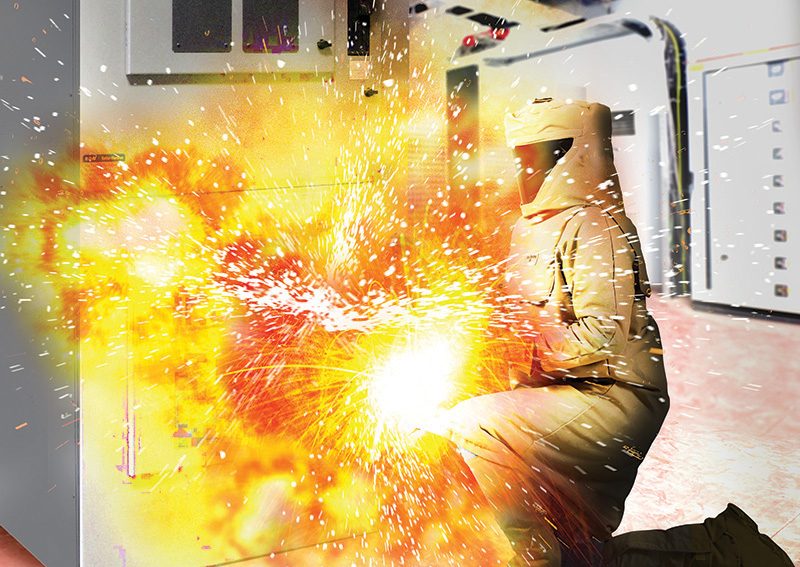
Onsite and virtual electrical safety training built for the hazards of Iowa’s ethanol and biofuel production, hyperscale data centers, agricultural equipment manufacturing, and utility operations — led by Certified Safety Professionals with 35+ years of field experience.
4-hour, 8-hour, and 2-day class formats — onsite at your Iowa facility or live virtual via Zoom or Microsoft Teams. See upcoming open-enrollment class dates & seats below.
Iowa is home to the nation’s largest ethanol and biofuel production capacity, a rapidly expanding hyperscale data center corridor, and heavy agricultural equipment manufacturing — each with distinct high-voltage electrical hazards. We deliver 2027 NFPA 70E training built specifically for the work Iowa qualified electrical workers actually do. Employers also search for arc flash training in Iowa — it is the same 2027 NFPA 70E-compliant program described above, delivered onsite or via live virtual instruction.
2027 NFPA 70E training in Iowa is delivered onsite at your facility or live online, taught by a Certified Safety Professional rather than played from a recording. Every session is built on the 2027 edition of NFPA 70E, which has been in effect since May 6, 2026.
Four lengths, chosen by role: 4-Hour Awareness for non-electrical staff who work around energized equipment; 4-Hour QEW Refresher for workers who already hold current 2027 NFPA 70E training; 8-Hour QEW, the full qualified-electrical-worker curriculum; and the 2-Day Intensive QEW with examination. Typical attendees are electricians, maintenance technicians, plant and facility engineers, and the EHS staff who own the electrical safety program.
Every industry sector in Iowa carries its own electrical hazard profile. We build curriculum around the specific equipment, voltage levels, and facility types your workers encounter every day.
Iowa has no crude oil or natural gas production, but the state’s dense network of fuel terminals, biofuel pipelines, and natural gas distribution utilities still requires qualified electrical workers trained on compressor and pumping station switchgear, SCADA control power, and 2027 NFPA 70E-compliant lockout/tagout procedures.
Iowa’s ethanol and biodiesel refineries — the largest concentration in the nation — operate continuous process facilities with 480V to 13.8kV distribution systems, large rotating equipment, and classified electrical areas. Arc flash incident energy levels in biofuel plant switchgear rooms can be severe without proper hazard analysis.
Iowa’s construction sector and rural electric cooperatives face a mix of 2027 NFPA 70E/OSHA 29 CFR 1926 Subpart K construction electrical hazards and 1910.269 utility line work, particularly amid the state’s ongoing wind energy and transmission buildout.
Municipal electric utilities and water/wastewater treatment facilities across Iowa require training on switchgear up to 13.8kV, transformer maintenance, and OSHA 29 CFR 1910.269 compliance alongside 2027 NFPA 70E.
Iowa’s hyperscale data center corridor — anchored by facilities in the Des Moines metro — operates critical UPS systems, 480V bus duct, and generator switchgear requiring trained qualified electrical workers for live work justification and energized electrical work permits.
Iowa manufacturing, led by agricultural and heavy equipment production alongside food processing, runs complex 480V and 4.16kV distribution systems where arc flash studies and qualified worker training are required under Iowa OSHA standards.
Iowa operates its own OSHA-approved State Plan, administered by Iowa OSHA, a division of Iowa Workforce Development. Iowa OSHA standards must be at least as effective as federal OSHA requirements, and the agency has adopted federal electrical safety standards — including 29 CFR 1910 Subpart S — that are enforced with 2027 NFPA 70E as the recognized industry method.
Iowa OSHA enforces a General Duty Clause equivalent requiring employers to protect workers from recognized hazards, including arc flash. Training qualified electrical workers to 2027 NFPA 70E standards is the most defensible compliance posture available to Iowa employers, and Iowa OSHA compliance officers routinely reference 2027 NFPA 70E during electrical safety inspections.
For Iowa’s ethanol, data center, and manufacturing operations, the intersection of Iowa OSHA electrical standards and facility-specific hazard categories creates a layered compliance obligation that demands training tailored to each site’s equipment, PPE ratings, and written safety procedures.
Onsite delivery to your facility, anywhere in the state
Both formats are available onsite at your facility or virtually via Zoom or Microsoft Teams. All sessions are led live by a Certified Safety Professional.
Full 2027 NFPA 70E curriculum covering the 2027 NFPA 70E classroom training requirements for electrical workers in oil/gas, petrochemical, industrial, and construction environments.
Best for: Initial qualification or triennial retraining of electrical workers in oil/gas and industrial settings.
Request a QuoteThe core qualification course for electricians, maintenance personnel, and technicians who work on or near energized equipment at 50 volts or more — covering hazard identification, PPE selection, and safe work practices in a single working day.
Best for: Initial qualification of electricians, maintenance technicians, and other workers who perform hands-on electrical work.
Request a QuoteCondensed review for workers with prior 2027 NFPA 70E training, covering 2027 edition changes, regulatory updates, and reinforcement of core electrical safety practices.
Best for: Annual compliance refreshers at industrial and utility operations.
Request a QuoteHazard recognition and boundary awareness for employees who work near — but never on — energized electrical equipment: operators, general maintenance, facilities staff, and other personnel who need to understand the risk without performing electrical work themselves.
Best for: Operators, facilities staff, and other unqualified personnel who work near energized equipment but do not perform electrical work.
Request a QuoteLive, instructor-led classes to the 2027 edition — reserve individual seats, or bring us onsite for your whole team.
The 2027 edition changed what a qualified worker has to be trained on. See what changed in the 2027 NFPA 70E edition — and what it means for Iowa employers preparing crews this year.
Answers to the questions Iowa safety managers and EHS directors ask most often.
The 2027 edition — in effect since May 6, 2026 — tightens several requirements employers should know about. Highlights include a new requirement for an additional person trained in emergency response whenever the energized work permit calls for shock or arc flash PPE, a stronger expectation that the emergency response plan is settled before a panel is ever opened, job briefings that cover the specific task’s hazards and required PPE, and a management-of-change expectation that incident-energy analyses are reviewed whenever the electrical system changes — not just on a fixed calendar. Every class we teach is built on the 2027 edition.
Iowa OSHA does not explicitly cite 2027 NFPA 70E in its adopted electrical standards, but it is used as the recognized industry standard for demonstrating compliance with the state’s General Duty Clause equivalent. Employers who follow 2027 NFPA 70E have the strongest available defense during an Iowa OSHA inspection. In investigations involving electrical incidents at Iowa data centers, ethanol plants, or manufacturing facilities, 2027 NFPA 70E compliance is routinely used to evaluate whether an employer took adequate precautions against recognized arc flash hazards.
Yes. We routinely deliver training at operating ethanol plants, data centers, and manufacturing facilities across Iowa. We build the curriculum around your facility’s specific equipment, hazard categories, and PPE inventory. Before each engagement we review your arc flash study, one-line diagrams (where available), and existing electrical safety program to ensure the training addresses the actual hazards your workers face on the floor.
We cap all sessions at 20 participants to ensure every worker receives individual attention and meaningful engagement with the material. Smaller group sizes produce measurably better outcomes — reflected in our 9.46/10 participant rating. If your workforce requires training for more than 20 workers, we schedule additional sessions at your facility rather than exceeding the cap.
NFPA 70E is a workplace electrical safety standard, not a credentialing body, so the training itself doesn’t confer a personal certification. What Iowa participants receive is a completion certificate delivered the same day as class — the training record your program needs to document a qualified worker. See the 2027 NFPA 70E class calendar for upcoming Iowa sessions.
We respond to every inquiry within 24 hours. Tell us your location, workforce size, and industry and we’ll build a program around your specific hazards and schedule.