
Available Nationwide • Onsite & Live Virtual • Fast Scheduling
NFPA 70E training class in session — instructor-led electrical safety training

NFPA 70E Training
On the 2027 Edition, Taught Live

NFPA 70E training qualifies the people who work on or near energized electrical equipment — and documents it. Our courses are taught live by a Certified Safety Professional on the current 2027 edition of NFPA 70E, in 4-hour, 8-hour, and 2-day formats, delivered virtually over Zoom or Microsoft Teams or onsite at your facility, nationwide.
What is NFPA 70E training? Instructor-led training on NFPA 70E — the Standard for Electrical Safety in the Workplace — that teaches workers to recognize electrical hazards, establish an electrically safe work condition, respect approach and arc flash boundaries, and select the right PPE, and gives employers the documentation behind qualified-person status. Ours is taught live on the current 2027 edition, virtual ($275/person) or onsite.

Formats
4-hour, 8-hour & 2-day — virtual or onsite
Edition
2027 NFPA 70E — current since May 6, 2026
Starting price
$275 / person (open-enrollment virtual)
Instructor
Rick Hauf, CSP — live, never pre-recorded
Certified Safety Professionals (CSP)
All instructors credentialed
OSHA Authorized Outreach Instructors
General industry & construction
9.46/10 Participant Rating
Virtual & onsite sessions combined
35+ Years Per Instructor
Real field experience

What Is NFPA 70E Training?

NFPA 70E is the Standard for Electrical Safety in the Workplace, published by the National Fire Protection Association. It is the standard employers across the country build their electrical safety programs on: how to assess electrical hazards, when equipment must be de-energized, where the approach and arc flash boundaries fall, what PPE the work requires, and who is permitted to do it. NFPA 70E training is the class that puts that framework into workers' hands — and produces the training records an employer's program stands on.

The standard's central idea is the qualified person: someone who has demonstrated the skills and knowledge related to the construction and operation of the equipment involved, and has received safety training on the hazards. Note both halves — instruction plus demonstration. A class alone doesn't make someone qualified on gear they've never seen, and no card in a wallet substitutes for either half. Our courses deliver the instruction side thoroughly and give employers the documentation they pair with their own task-level verification.

Every class we teach is built on the current standard — the 2027 edition of NFPA 70E, in effect since May 6, 2026 — not the superseded 2024 edition still circulating in many training decks. And every class is live: virtual over Zoom or Microsoft Teams, or onsite at your facility with your equipment as the teaching material. For the class built specifically around the arc flash hazard, see our arc flash training page.

What the Course Covers

The agenda below is the 8-hour qualified electrical worker day; the 4-hour refresher compresses it for workers who hold a current qualification, and the 2-day intensive extends it with deeper casework. Every module is taught to the 2027 edition.

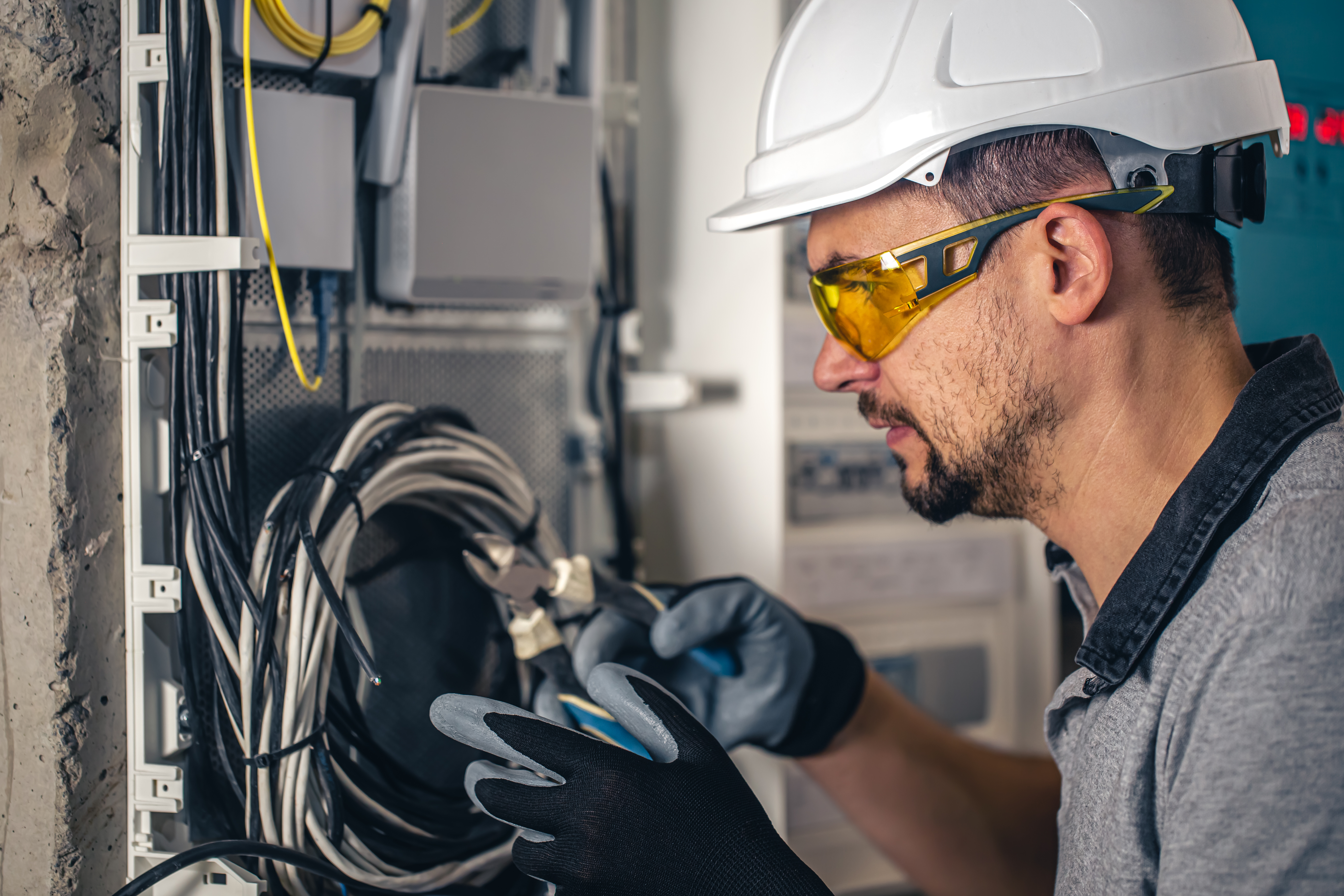
Electrician at a switchboard — NFPA 70E training maps the standard to the worker's actual tasks
1
Electrical Hazards & How the Standard Thinks
Shock and arc flash as distinct hazards, what an arc flash actually is, and how NFPA 70E structures the decisions between a task and the work permit.
2
Electrically Safe Work Condition & LOTO
De-energize first: the steps to an electrically safe work condition, verifying absence of voltage, and lockout/tagout as the default — energized work as the justified exception.
3
Approach & Arc Flash Boundaries
The limited and restricted approach boundaries for shock, the arc flash boundary for thermal exposure, and how to read them off the equipment label.
4
Risk Assessment & Hierarchy of Controls
The hazard and risk assessment the standard expects before work begins, with elimination first and PPE treated as the last control — not the first.
5
PPE Selection, Inspection & Care
Selecting arc-rated clothing, face protection, gloves, and insulated tools for the task, and keeping them serviceable so they work when it counts.
6
Energized Work Permits & Job Briefings
When energized work is justified, completing a compliant permit, and the expanded 2027-edition job briefing — the task's hazards, boundaries, PPE, and emergency plan — before a panel is opened.
7
The 2027 Changes Your Program Inherits
The additional-person requirement on permitted work, the emergency response plan settled up front, and management of change for incident-energy analyses — taught as program decisions, not trivia.
8
Knowledge Check & Documentation
A final knowledge check, same-day certificates, and the training records your program files — the paper trail an inspector, insurer, or incident investigation will ask for.

Three Ways to Take the Course

Same curriculum, same CSP-certified instructor, same 2027 edition — pick the delivery that fits your team's size, locations, and schedule.

Hands-On
Onsite at Your Facility
We travel to you • Nationwide

The instructor comes to your plant, data center, or job site and teaches the standard on your switchgear, your labels, and your procedures — the strongest format for full crews and site-specific programs. Groups capped at 20.

  • Curriculum built around your equipment and hazards
  • Walk-downs and label reviews on your own gear
  • Train an entire shift or crew in one visit
  • Certificates & documentation delivered same day
Custom
Private Group Programs
Virtual or onsite • Your dates

A dedicated session for your organization only — scheduled on your dates, tailored to your industry, and scoped to your mix of first-time qualified workers, refresher candidates, and awareness-level staff.

  • Qualified worker, refresher, and awareness tracks
  • Multi-site and multi-cohort scheduling
  • Industry-specific scenarios and case studies
  • Quotes returned within one business day

Who Needs NFPA 70E Training?

The dividing line the standard draws is exposure to electrical hazards — not job title. Electricians and maintenance technicians who work on or near energized equipment need it to support qualified-person status. Operators and facilities staff who rack breakers, reset equipment, or work near electrical hazards need training scaled to their exposure. And the EHS managers and supervisors who sign energized electrical work permits and run the electrical safety program need to understand what they're signing.

Training is also where the legal duty lives. OSHA's electrical safety standards for general industry (Subpart S), together with the General Duty Clause, require employers to protect workers from recognized electrical hazards — and NFPA 70E is the industry standard OSHA recognizes as the way to do that. OSHA does not mandate NFPA 70E by name; what it expects is a demonstrably effective program, and current, documented NFPA 70E training is how most employers show they have one.

Retraining has a clock: intervals not to exceed three years, and sooner when job tasks or equipment change, procedures change, an incident or near-miss occurs, or observed performance shows a deficiency. If your last class was taught on the 2024 edition, the 2027 changes below are a concrete reason not to wait for the calendar.

Training a crew of electricians? Our guide to NFPA 70E training for electricians maps the course to the trade's actual tasks — why a license alone isn't qualified-person status, and what a crew needs before energized work.

Trained on the Current Standard —
Not the Last One

The 2027 NFPA 70E has been in effect since May 6, 2026, superseding the 2024 edition. These are the changes a class taught on 2024 material never mentions.

An additional person on permitted work
When the energized electrical work permit specifies shock or arc flash PPE, the 2027 edition requires at least one additional person — trained in emergency response and positioned outside the boundaries — so the worker at the panel is never alone if something goes wrong.
Emergency response settled before work starts
The emergency response plan must be worked out before the task begins — who is trained in contact release, where the rescue hook and AED are, who calls for help — not improvised after an event.
Expanded job briefings
Job briefings now go deeper on the specific task: the incident energy at the point of work, the PPE that number demands, the boundaries in play, and the emergency plan — a real conversation, not a signature on a form.
Management of change for incident-energy analyses
Incident-energy analyses must be reviewed when the electrical system changes — fault current, protective-device settings, or clearing times — not just on a fixed calendar. A label is a snapshot of the system as studied.

NFPA 70E Training — Frequently Asked Questions

How long does NFPA 70E training take?
Our courses run in three lengths: a 4-hour refresher format, the 8-hour qualified electrical worker (QEW) day, and a 2-day intensive for crews that need the deepest treatment. The right length depends on whether workers are qualifying for the first time, refreshing a current qualification, or need awareness-level coverage only — ask us and we'll recommend the fit.
Does OSHA require NFPA 70E training?
OSHA requires employers to protect workers from electrical hazards under its electrical safety standards (Subpart S for general industry) and the General Duty Clause. OSHA doesn't name NFPA 70E by citation — but NFPA 70E is the recognized industry standard, and training built on it is how most employers demonstrate they've met that duty.
How often is NFPA 70E retraining required?
At intervals not to exceed three years — and sooner when job tasks or equipment change, procedures change, an incident or near-miss occurs, or observed performance shows a deficiency. Most employers anchor a three-year cycle and add refreshers when one of those triggers hits.
Is NFPA 70E training available online?
Yes — our virtual NFPA 70E training is delivered live over Zoom or Microsoft Teams by a CSP-certified instructor. It is never pre-recorded or self-paced: your team asks questions in real time and works through scenarios together, the same as an onsite class.
What's the difference between NFPA 70E training and arc flash training?
In practice the terms overlap heavily. NFPA 70E training covers the full standard — shock and arc flash hazards, safe work conditions, permits, PPE, and program documentation — while arc flash training is the same framework taught with the arc flash hazard at the center. If your crew works on or near energized equipment, either course leads to the same place: the current 2027 edition, taught live.
How much does NFPA 70E training cost?
Open-enrollment live virtual classes start at $275 per person — see upcoming dates and register. Onsite and private group training is quoted by group size, format, and location — request a quote and we respond within one business day.
About your instructor. Rick Hauf, CSP, is a Certified Safety Professional with 35+ years in EHS and electrical safety. He teaches NFPA 70E nationwide — more than 55 classes a year to electricians, EHS professionals, and Fortune 500 operators including hyperscale data centers, manufacturers, and utilities — with attendee ratings averaging 9.46/10. Every class reflects the 2027 edition of NFPA 70E. This page is an educational overview and is not a substitute for a site-specific safety program review or professional judgment.

Ready to Schedule NFPA 70E Training?

Live virtual or onsite at your facility — register for an upcoming class or request a quote and we respond within one business day.