Available Nationwide • Onsite & Live Virtual • Fast Scheduling
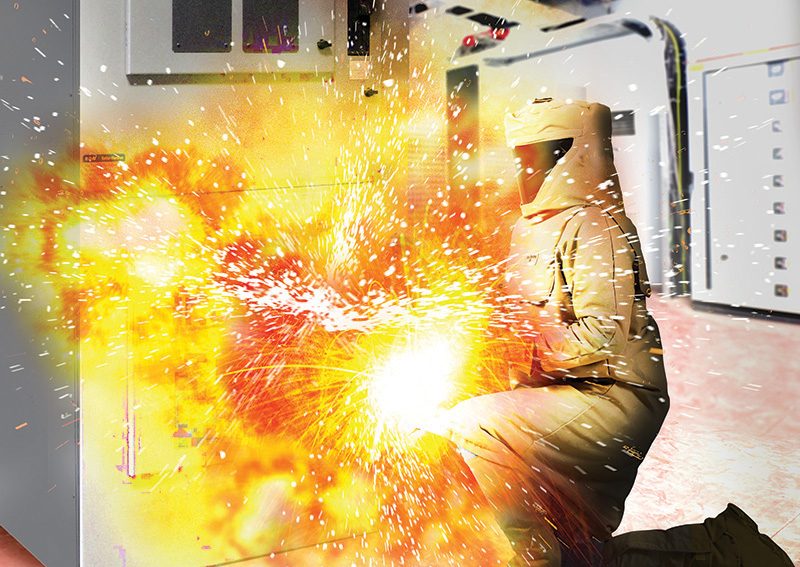
Arc flash safety training — electrical worker in arc-rated PPE at energized equipment

Arc Flash Safety Training
Built on the 2027 NFPA 70E

Arc flash safety training teaches the people who install, maintain, and troubleshoot energized electrical equipment how to recognize arc flash and shock hazards, plan the work, stay outside the boundaries, and select the right arc-rated PPE when they can't. If your electricians, maintenance technicians, operators, or contractors work on or near energized equipment, this training is for them — delivered live virtual or onsite at your facility, nationwide.
Formats
Live virtual, onsite, or private group
Edition
2027 NFPA 70E — current since May 6, 2026
Starting price
$275 / person (open-enrollment virtual)
Instructor
Rick Hauf, CSP — live, never pre-recorded
Certified Safety Professionals (CSP)
All instructors credentialed
OSHA Authorized Outreach Instructors
General industry & construction
9.55/10 Participant Rating
Virtual & onsite sessions combined
30+ Years Per Instructor
Real field experience

What Is Arc Flash Training?

An arc flash is a release of energy from an electric arc — unintended fault current passing through the air — that produces intense heat, blinding light, a pressure wave, and flying shrapnel. It happens in a fraction of a second, often while someone is standing directly in front of the equipment doing routine work: racking a breaker, taking a voltage measurement, opening a panel cover.

Arc flash training exists so that moment never arrives unplanned. A good class teaches workers to identify which tasks and which equipment carry arc flash and shock risk, to establish an electrically safe work condition whenever possible, to read arc flash labels and respect the boundaries they define, and to select and wear arc-rated PPE when energized work is genuinely justified. Just as important, it gives supervisors and safety managers the framework — the 2027 edition of NFPA 70E, in effect since May 6, 2026 — to document that their people are qualified for the work they're assigned.

We teach that class two ways: live virtual over Zoom or Microsoft Teams, or onsite at your facility with your equipment as the teaching material. Same curriculum, same CSP-certified instructor, never pre-recorded. For a deeper look at how the training requirements are structured, see our guide to NFPA 70E arc flash training under the 2027 edition.

Three Ways to Get Your Team Trained

Every format is taught live by a CSP-certified instructor on the 2027 NFPA 70E. Pick the delivery that fits your team's size, locations, and schedule.

Hands-On
Onsite at Your Facility
We travel to you • Nationwide

The instructor comes to your plant, data center, or job site and teaches with your switchgear, your labels, and your procedures in view. Searching for “arc flash training near me”? This is it — we come to you, in all 50 states.

  • Curriculum built around your equipment and hazards
  • Walk-downs and label reviews on your own gear
  • Train an entire shift or crew in one visit
  • Certificates & documentation delivered same day
Custom
Private Group Programs
Virtual or onsite • Your dates

A dedicated session for your organization only — scheduled on your dates, tailored to your industry, and scoped to your mix of qualified workers, refresher candidates, and awareness-level staff.

  • Qualified worker, refresher, and awareness tracks
  • Multi-site and multi-cohort scheduling
  • Industry-specific scenarios and case studies
  • Quotes returned within one business day

Why Arc Flash Training Matters

Arc flash injuries are unforgiving because of how close workers stand to the hazard. The reference point the industry uses is the arc flash boundary: the distance from the equipment at which the incident energy equals 1.2 cal/cm² — the onset of a curable second-degree burn to bare skin. Inside that boundary, arc-rated PPE isn't optional; it's the last line of defense after every other control has been considered. Most of the routine tasks that trigger arc flash events — voltage testing, racking breakers, opening covers on energized gear — happen well inside it.

Training is also where legal duty meets daily practice. OSHA's electrical safety standards for general industry (Subpart S), together with the General Duty Clause, require employers to protect workers from recognized electrical hazards — and NFPA 70E is the industry standard OSHA recognizes as the way to do that. OSHA does not mandate NFPA 70E by name; what it expects is a demonstrably effective program, and a documented, current arc flash training program built on the 2027 edition is how most employers show they have one. When an inspector, an insurer, or an incident investigation asks “how do you know this worker was qualified?”, your training records are the answer.

There's a third reason that has nothing to do with compliance: trained crews make better decisions. Workers who understand what the label on the panel actually means, why the boundary is drawn where it is, and what the energized work permit is really asking are far more likely to de-energize first, question a risky shortcut, and speak up when something has changed since the last hazard assessment.

Who counts as a qualified person? Under NFPA 70E, a qualified person is one who has demonstrated the skills and knowledge to work on the specific equipment involved and has received the required safety training — training plus a task-specific demonstration, not a certificate alone. Our courses are built to support both halves: the instruction, and the documentation employers use alongside their own task-level verification.

What Good Arc Flash Training Covers

Whatever the format, an arc flash class worth your crew's time covers the full arc of the standard — from recognizing the hazard to documenting the work. Here's what ours includes.

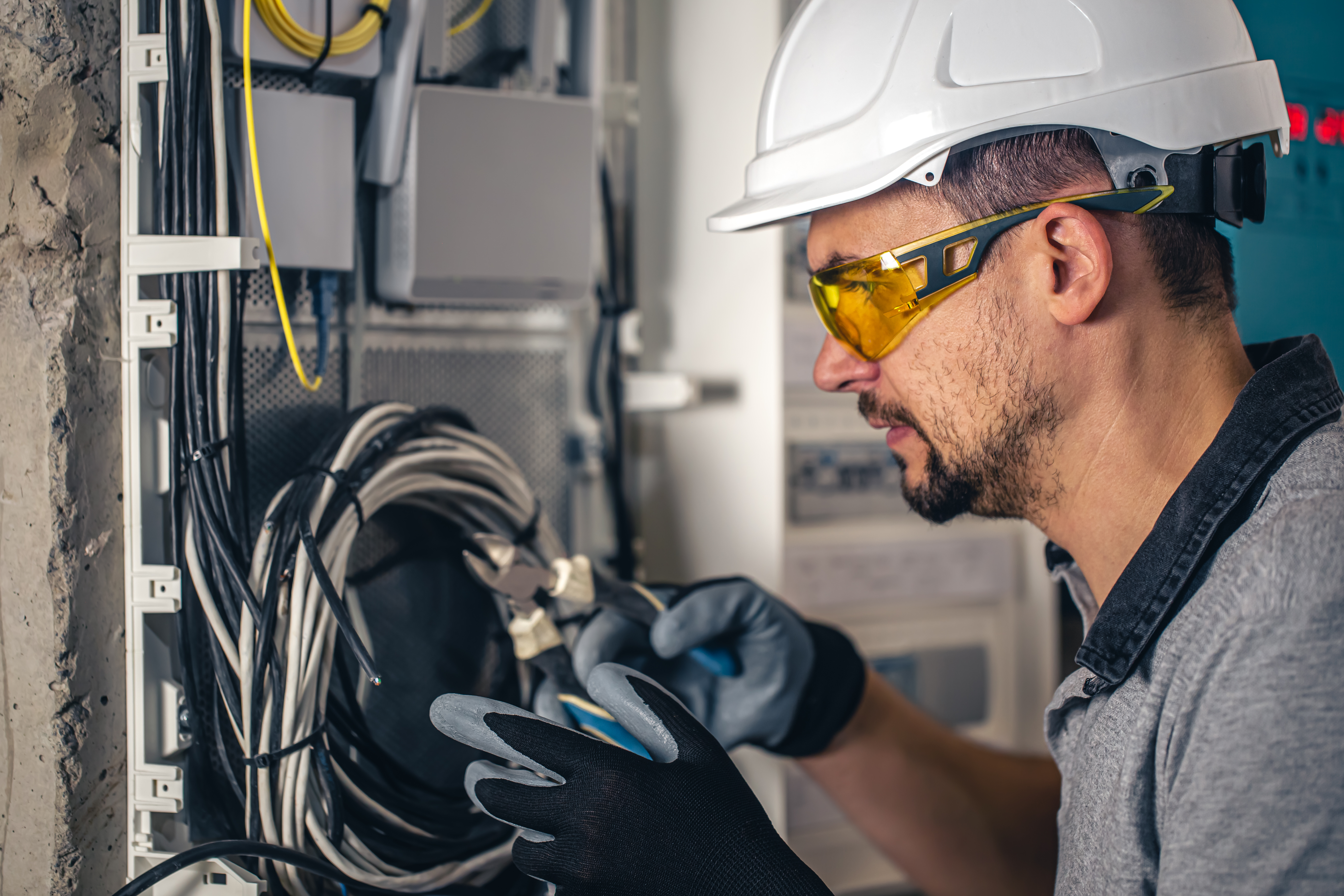
Electrician working at a switchboard — hazard recognition is the core of arc flash safety training
1
Arc Flash & Shock Hazard Recognition
What causes an arc flash, which tasks and equipment carry the risk, and how to spot the warning signs before work begins.
2
Boundaries & Arc Flash Labels
The shock approach boundaries and the arc flash boundary — who may cross them, what protection is required, and how to read the label on the gear.
3
Electrically Safe Work Condition & LOTO
De-energize first: verifying absence of voltage, lockout/tagout, and why “it's off” is a conclusion you test, not assume.
4
Risk Assessment & Hierarchy of Controls
Working through the hazard and risk assessment the standard expects, with PPE treated as the last control — not the first.
5
Arc-Rated PPE Selection & Care
Choosing arc-rated clothing, face protection, gloves, and insulated tools for the task — and inspecting and maintaining them so they work when it counts.
6
Energized Work Permits & Job Briefings
When energized work is justified, how a compliant permit is completed, and what an expanded 2027-edition job briefing covers before anyone opens a panel.
7
Incident Case Studies
Real arc flash events analyzed through the 2027 NFPA 70E framework — what went wrong, and what would have prevented it.

Trained on the Current Standard —
Not the Last One

The 2027 NFPA 70E has been in effect since May 6, 2026, superseding the 2024 edition. If your last class was taught on 2024 material, these are the changes your crews are missing.

An additional person on permitted work
When an energized work permit calls for shock or arc flash PPE, the 2027 edition requires an additional person — trained in emergency response — to be part of the job, so the worker at the panel is never alone if something goes wrong.
Emergency response settled before work starts
The emergency response plan must be worked out before the task begins — who calls, who rescues, where the AED is — not improvised after an event.
Expanded job briefings
Job briefings now go deeper on the specific task: the hazards involved, the boundaries in play, and the PPE required — a real conversation, not a signature on a form.
Management of change for incident-energy analyses
Incident-energy analyses must be reviewed when the electrical system changes — new equipment, revised breaker settings, utility changes — not just on a fixed calendar.

Arc Flash Training — Frequently Asked Questions

How often is arc flash training required?
NFPA 70E sets retraining intervals not to exceed three years — and sooner when tasks or equipment change, procedures change, an incident or near-miss occurs, or a supervisor observes a deficiency in safe work practices. Most employers anchor a three-year cycle and add refreshers whenever one of those triggers hits.
Is arc flash training available online?
Yes — our virtual arc flash training is delivered live over Zoom or Microsoft Teams by a CSP-certified instructor. It is never pre-recorded or self-paced: your team asks questions in real time and works through scenarios together, the same as an onsite class.
Does OSHA require arc flash training?
OSHA requires employers to protect workers from electrical hazards under its electrical safety standards (Subpart S for general industry) and the General Duty Clause. OSHA doesn't name NFPA 70E by citation — but NFPA 70E is the recognized industry standard, and training built on it is how most employers demonstrate they've met that duty. More detail in our 2027 arc flash training guide.
What is the arc flash boundary?
The arc flash boundary is the distance from potential arc-flash-producing equipment at which the incident energy equals 1.2 cal/cm² — the onset of a curable second-degree burn to bare skin. Anyone crossing that boundary while the hazard exists must wear arc-rated PPE appropriate to the task.
How much does arc flash training cost?
Open-enrollment live virtual classes start at $275 per person. Onsite and private group training is quoted by group size, format, and location — request a quote and we respond within one business day.
This page is an educational overview and is not a substitute for a site-specific safety program review or professional judgment. Taught by Rick Hauf, CSP. Learn more about our programs on the Arc Flash Training homepage.

Ready to Schedule Arc Flash Training?

Live virtual or onsite at your facility — call us or request a quote and we respond within one business day.