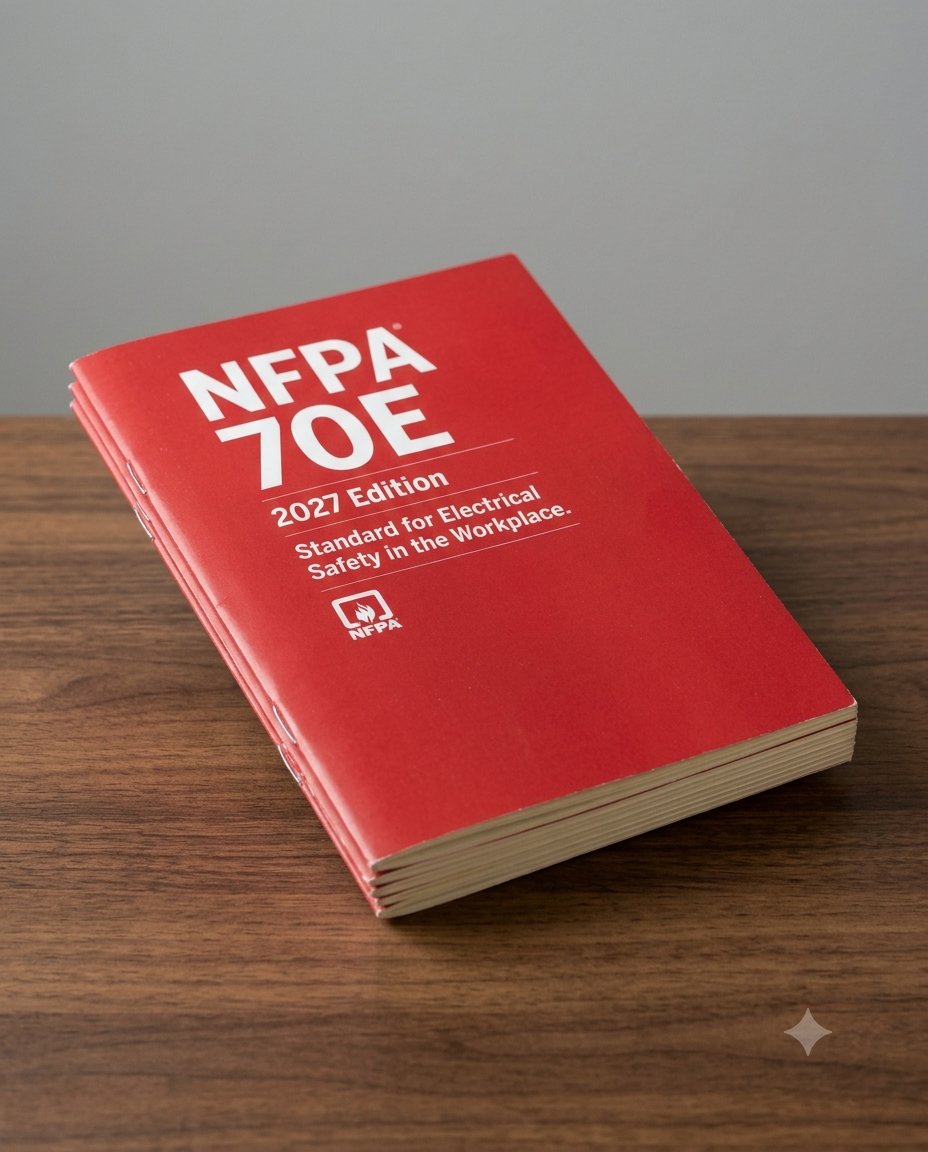
Search for "NFPA 70E classes" and you'll find everything from $30 click-through modules to two-day intensives — all claiming to make your people compliant. As an instructor, here's the honest version: a good NFPA 70E class in 2026–27 teaches the current 2027 edition (in effect since May 6, 2026), builds real qualified persons rather than certificate holders, and ends with the instructor confident each student can apply what was taught. This article walks through what a class worth paying for actually covers, block by block, so you can evaluate any provider — including us.
Start with the edition — it's the fastest quality check
Before you ask about price or schedule, ask one question: "Which edition of NFPA 70E is your course built on?" The 2027 edition is the current, authoritative standard and has been since May 6, 2026. It supersedes the 2024 edition, and it made changes that land directly on how energized work is authorized, staffed, and briefed. A class still teaching 2024 — or worse, one that mentions the "prohibited approach boundary," a concept removed back in 2015 — is training your crew to an outdated standard.
The core curriculum: what every real class covers
The two hazards, explained properly
Everything in NFPA 70E flows from two hazards: shock and arc flash. A good class makes sure students genuinely understand the second one — an arc flash is a release of energy caused by an electric arc, an unintended fault current travelling through air between conductors or to ground, producing intense heat, light, a pressure wave, and shrapnel. Students who understand why the boundaries and PPE exist follow them differently than students who memorized a poster.
Boundaries you can actually apply
Shock protection uses the limited and restricted approach boundaries. Arc flash protection uses the arc flash boundary — the distance from exposed energized parts at which incident energy equals 1.2 cal/cm², the onset of a curable second-degree burn. A quality class doesn't just define these; it has students determine them for realistic equipment scenarios and answer the question that matters in the field: "where do I stand, and what do I wear, for this task?"
PPE selection — both methods, used correctly
Students should leave understanding incident energy: the thermal energy at a working distance from an arc, expressed in cal/cm², driven by the available fault current and how fast the protective device clears. It's system- and setting-specific — not a fixed property of the equipment. From there, the class covers both selection approaches: the incident-energy-analysis method (matching PPE to the value on the label) and the table method, with its four PPE categories carrying minimum arc ratings of 4, 8, 25, and 40 cal/cm². Critically, a good instructor teaches that a facility uses one method or the other for a given task — never both mixed together.
Qualified-person fundamentals
A qualified person has demonstrated skills and knowledge related to the construction and operation of the equipment, plus safety training on the hazards involved. Note the word demonstrated — qualification is established by training plus task-specific demonstration, which is exactly why a class where nobody checks understanding can't, on its own, make anyone qualified.
What the 2027 edition added — and your class must include
This is where older course content quietly fails. The 2027 edition concentrated its changes on energized work, and a current class covers all four:
- The additional-person requirement — new 130.2(A)(2). When an energized electrical work permit specifies shock or arc flash PPE, at least one additional person must be present — trained to the emergency-response requirements of 110.4(C)(1) and positioned outside the limited approach or arc flash boundary, whichever is greater. This is a standby rescuer, not a helper; a second set of hands inside the boundary doesn't satisfy it.
- Emergency response planning before the work. Who is trained in contact release, where the rescue hook and AED physically are, who calls for help, and how emergency responders actually reach the gear — settled before a panel is opened, not improvised after an event.
- Job briefings that protect the person. The briefing covers the incident energy at the point of work, the PPE that number demands, where the boundaries fall, energy-source control, and the emergency plan — including where the additional person stands.
- Management of change. The incident-energy analysis gets reviewed when the electrical system changes — fault current, protective-device settings, or clearing times — not only on a fixed calendar. An arc flash label is a snapshot, valid only for the system as studied. (We wrote up a field example in how one breaker setting can blow up your incident energy.)
Our classes teach the 2027 edition — live, every week
Live instructor-led NFPA 70E training, current to the 2027 edition, taught by a Certified Safety Professional. Virtual seats weekly, onsite nationwide.
See Virtual TrainingFormats: picking the right class type
The market has settled into three formats, and each has a legitimate use:
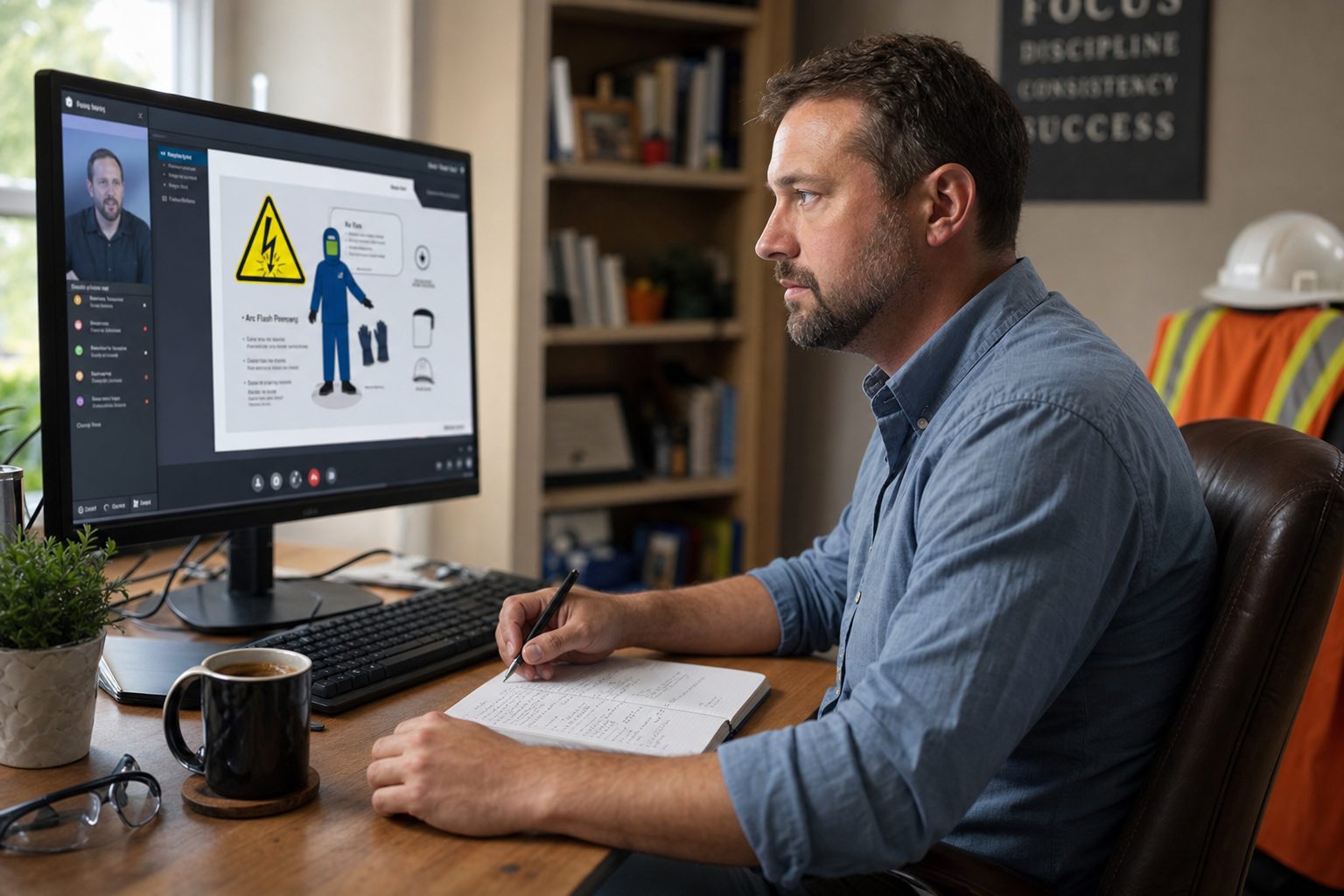
- Live virtual (instructor-led). A real class at a set time. You get questions answered in the moment, discussion of your actual equipment, and an instructor who confirms the group can apply the material — which matters most for the 2027 judgment calls like staffing the additional person. Our take on the trade-offs: live-instructor vs. self-paced online training.
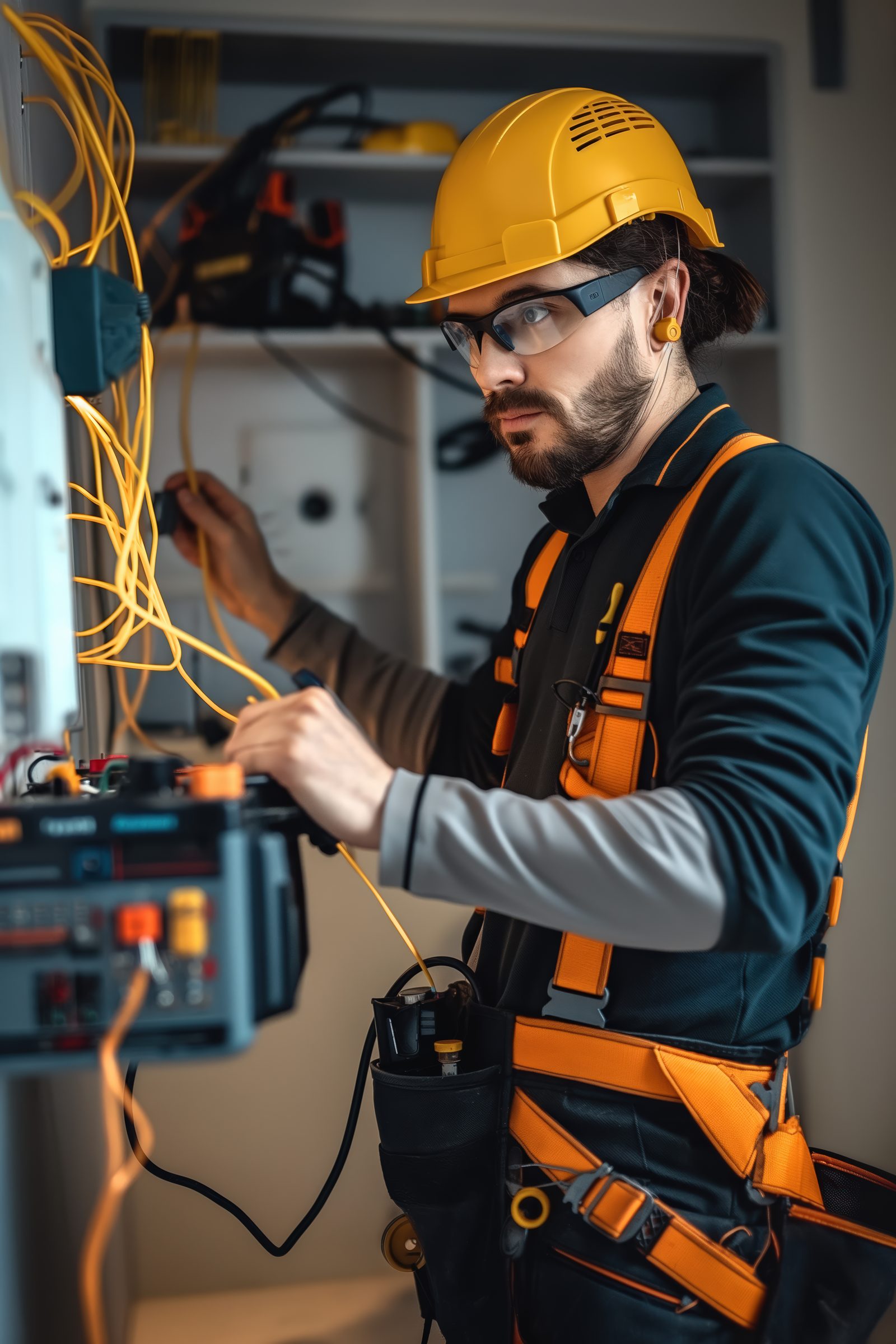
- Onsite. The instructor comes to your facility and teaches on your equipment, your labels, your procedures. Strongest option for crews of roughly ten or more, and the only format where the class can walk your actual electrical rooms. See onsite training.
- Self-paced modules. Recorded content on the worker's own schedule. Fine for general awareness on a budget — but nobody verifies understanding in the moment, and content can quietly fall behind the current edition. Check the edition before you buy.
On length: the market default for initial qualified-electrical-worker training is the 8-hour day, with 4-hour formats generally used as refreshers. Be skeptical of a 90-minute course claiming to do the whole job.
The retraining clock — and what restarts it
NFPA 70E retraining is required at intervals not to exceed three years — and sooner when job tasks or equipment change, procedures change, an incident or near-miss occurs, or observed performance shows a deficiency. A good provider tells you this plainly, dates the certificates, and makes the three-year cycle easy to manage. (Related but distinct: the written electrical safety program itself gets reviewed at intervals not to exceed three years — two different clocks that a good class keeps straight.)
"Is this required by OSHA?" — the honest answer
You'll see providers claim "OSHA requires NFPA 70E training." That's not quite right, and a trainer who says it that way is being sloppy. OSHA does not adopt NFPA 70E by name; it enforces electrical safety through Subpart S and the General Duty Clause, and uses NFPA 70E as the recognized industry standard — the measure of what a reasonable employer would have done. Training your people to the current edition is the most defensible way to meet that expectation. We unpack this fully in OSHA and NFPA 70E in 2027.
Frequently asked questions
How long is an NFPA 70E class?
The market default for initial qualified-worker training is a full 8-hour day; 4-hour classes are typically refreshers. Two-day formats add hands-on evaluation and deeper practice.
How often do workers need to retake the class?
At intervals not to exceed three years — and sooner if tasks, equipment, or procedures change, an incident or near-miss occurs, or observed performance shows a deficiency.
Are online NFPA 70E classes acceptable?
Live instructor-led virtual classes work well, including for workers who perform energized work, because competency can be checked in real time. Self-paced modules fit general awareness. Either way, confirm the content teaches the current 2027 edition.
Does a class make my workers "qualified"?
A class is the training half. Qualification also requires demonstrated skills and knowledge on the specific equipment and tasks — something the employer establishes, typically with task-specific demonstration after training.
Which edition should the class teach in 2026?
The 2027 edition — current since May 6, 2026. A class on the 2024 edition misses the additional-person rule, the emergency-response expectations, and the renumbering.
Rick Hauf, CSP is a Certified Safety Professional with 35+ years in EHS and electrical safety. He teaches NFPA 70E nationwide - roughly 25 classes a year to electricians, EHS professionals, and Fortune 500 operators including hyperscale data centers, manufacturers, and utilities - with attendee ratings averaging 9.7/10. This article reflects the 2027 edition of NFPA 70E.