Available Nationwide • Onsite & Virtual • Fast Turnaround
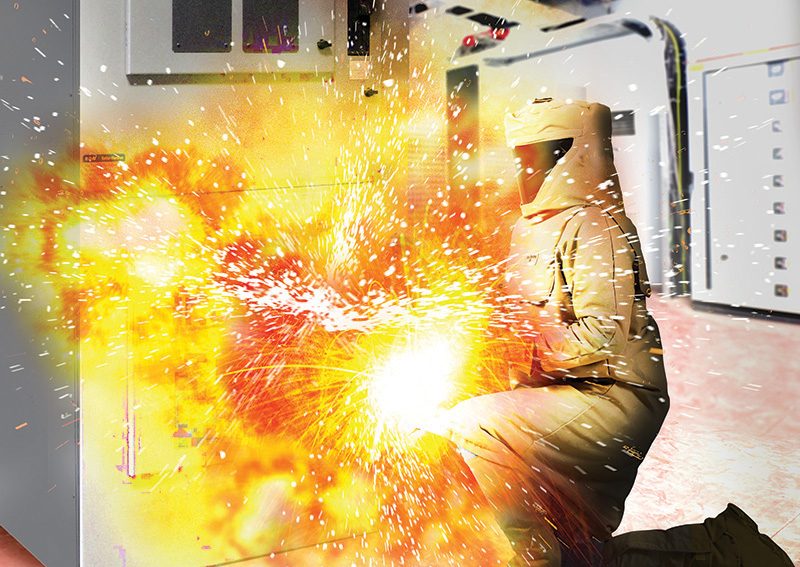
Arc flash hazard — 2027 NFPA 70E electrical safety training in Baltimore, Harford County and Prince George's County, Maryland
2027 NFPA 70E Training — Baltimore, Harford & PG County, MD

Baltimore, Harford & PG County 2027 NFPA 70E Electrical Safety Training
onsite across Central Maryland

Onsite and virtual electrical safety training for Maryland port terminals, federal and defence installations, hospitals and research campuses, data centres, utility crews, electrical contractors and construction crews — led by Certified Safety Professionals with 35+ years of field experience.

Upcoming Virtual, Instructor-Led Classes
Open Enrollment
Class
Date
Time
Seats
Status
Enroll
8-Hour NFPA 70E Electrical Safety
Qualified Electrical Worker - Live, Virtual
Sep 15
8:00 AM–4:30 PM EST
10 open
OPEN
Enroll
4-Hour NFPA 70E Electrical Safety
Qualified Electrical Worker Refresher - Live, Virtual
Sep 17
8:00 AM–12:00 PM EST
9 open
OPEN
Enroll
4-Hour NFPA 70E Electrical Safety
Qualified Electrical Worker Refresher - Live, Virtual
Sep 17
1:00 PM–5:00 PM EST
7 open
OPEN
Enroll
8-Hour NFPA 70E Electrical Safety
Qualified Electrical Worker - Live, Virtual
Sep 22
8:00 AM–4:30 PM EST
13 open
OPEN
Enroll
Have 15+ people? Book a private day →

Choose the Right Program for Your Workforce

Available onsite at your Baltimore, Harford County or Prince George's County facility, or virtually via Zoom or Microsoft Teams. All sessions are led live by a Certified Safety Professional.

Most Comprehensive

Intensive Qualified Electrical Worker with Examination

Full 2027 NFPA 70E curriculum covering the 2027 NFPA 70E classroom training requirements for electrical workers, concluding with a proctored written examination.

  • Complete 2027 NFPA 70E standard coverage
  • Arc flash incident energy and PPE category selection
  • Energized electrical work permits
  • Proctored written examination

Best for: Maryland industrial, utility and port-terminal electricians who need a documented, examination-verified qualification for prime contractor or insurance requirements.

Maximum 20 participants per session

Request a Quote
Core Qualification

8-Hour — Qualified Electrical Worker (QEW)

The core qualification course for electricians, maintenance personnel, and technicians who work on or near energized equipment at 50 volts or more.

  • Shock and arc flash hazard identification
  • PPE selection using the 2027 NFPA 70E tables
  • Lockout/tagout and OSHA 1910/1926 requirements
  • Scenario-based application exercises

Best for: Electricians, maintenance techs, and facilities personnel at Maryland plants, terminals, hospitals and commercial properties who need the core 2027 NFPA 70E qualification without a multi-day commitment.

Maximum 20 participants per session

Request a Quote
Refresher

4-Hour — QEW Refresher

Condensed review for workers with prior 2027 NFPA 70E training, covering 2027 edition changes, regulatory updates, and reinforcement of core safety practices.

  • 2027 NFPA 70E edition changes and updates
  • Regulatory changes affecting Maryland employers under the MOSH state plan
  • Risk assessment and PPE selection review
  • Incident energy analysis refresher

Best for: Previously qualified workers due for their 3-year 2027 NFPA 70E retraining, or Maryland employers updating documentation ahead of a MOSH inspection or insurance audit.

Maximum 20 participants per session

Request a Quote
Awareness

4-Hour — Electrical Safety Awareness

Hazard recognition and boundary awareness for employees who work near — but never on — energized electrical equipment.

  • Arc flash and shock hazard awareness
  • Recognizing energized equipment and warning labels
  • Approach boundaries and unqualified worker limits
  • When and how to report electrical hazards

Best for: HVAC techs, facilities staff, safety coordinators, and other unqualified personnel who work near energized equipment in Maryland commercial and industrial buildings.

Maximum 20 participants per session

Request a Quote

The Baltimore–Washington corridor packs three different industrial worlds into about sixty miles. The Port of Baltimore and the Tradepoint Atlantic redevelopment at Sparrows Point run heavy medium-voltage distribution in salt air. Harford County carries Aberdeen Proving Ground plus the distribution and manufacturing strung along I-95. Prince George’s County has NASA Goddard, Joint Base Andrews, the University of Maryland and a growing data-centre cluster on the Route 1 corridor. Crews cross between BGE and Pepco territory in a single week. Maryland is also a state-plan jurisdiction, so it is MOSH — not federal OSHA — that shows up, and MOSH covers county and municipal electrical workers too. Our onsite arc flash training comes to your facility; our live virtual classes put individual seats within reach of the smallest shop. Need statewide coverage? See the Maryland 2027 NFPA 70E training page — or all states.

Training Built for the Industries Along the I-95 Corridor

Baltimore, Harford County and Prince George’s County do not share an industrial base. A crane electrician at Seagirt, a contractor crew inside the fence at Aberdeen Proving Ground, and a facilities team on a Route 1 data centre floor face the same standard and completely different equipment. Classes are built around the gear your people actually open.

Port & Marine Terminals

Seagirt and Dundalk run ship-to-shore cranes, reefer racks and shore-power connections on medium-voltage feeds, outdoors, in salt air. Corrosion changes the condition-of-maintenance question, and condition of maintenance is what decides whether a task is treated as normal or abnormal. Tradepoint Atlantic’s redevelopment of Sparrows Point has added a second concentration of heavy distribution on the same water.

Federal & Defense Installations

Aberdeen Proving Ground, NASA Goddard in Greenbelt and Joint Base Andrews all run large campus distribution maintained largely by contractor crews. Contractors carry their own electrical safety program onto a host site that has its own, and the two have to reconcile before anybody opens a panel. Documentation matters here more than anywhere else in the state.

Healthcare & Research

Johns Hopkins, Hopkins Bayview and the University of Maryland Medical System run essential electrical systems where de-energising is a clinical decision, not just an electrical one. That is precisely the situation the energised work permit exists for, and it is the section most facilities handle worst.

Data Centres

The Route 1 corridor through Prince George’s County has become a genuine data-centre cluster. UPS systems, battery rooms and switchgear line-ups mean dc as well as ac hazards, and dc is where most existing training thins out fastest.

Utilities & Electrical Contractors

BGE covers Baltimore City, Baltimore County, Harford and Howard; Pepco covers Prince George’s. Crews routinely work across both territories in one week under two sets of host requirements. Contractors serving either need training that survives an audit by whichever utility is asking.

Food, Beverage & Distribution

The Domino refinery on the Inner Harbor, the distribution centres strung along I-95 through Harford County, and the Beltsville research and food-handling facilities all run washdown and high-cycle environments where equipment condition degrades faster than the PM schedule assumes.

Maryland Runs Its Own OSHA Plan — and MOSH Inspects Electrical Work

Maryland is not a federal OSHA state. It operates an OSHA-approved State Plan administered by Maryland Occupational Safety and Health (MOSH) under the Maryland Department of Labor, and unlike some state plans it covers both private employers and state and local government. A county public-works electrician in Upper Marlboro is covered; in a federal-OSHA state that same worker often would not be.

MOSH standards must be at least as effective as the federal ones, and MOSH has adopted the federal electrical safety standards at 29 CFR 1910 Subpart S. Those standards tell you that workers must be trained and qualified. They do not tell you how to determine an arc flash boundary, how to select PPE, or what has to be on an energised work permit. NFPA 70E is where that lives, which is why MOSH compliance officers reference it during electrical inspections even though it is a consensus standard rather than a regulation.

The practical consequence for a Baltimore, Harford or Prince George’s County employer: training your qualified electrical workers to the current 2027 edition of NFPA 70E is the most defensible position available to you, and training them to a superseded edition is a finding waiting to happen.

Two utilities, one metro, two sets of paperwork

Draw a line roughly along the Anne Arundel county boundary and you change utilities. North and east of it — Baltimore City, Baltimore County, Harford, Howard, Carroll — is Baltimore Gas and Electric. South and west, through Prince George’s and Montgomery, is Pepco. Southern Maryland is SMECO, and the Eastern Shore is largely Choptank Electric Cooperative.

This matters more than it sounds. Contractors working the Baltimore–Washington corridor cross that line constantly, and each utility has its own switching, clearance and contractor-qualification expectations layered on top of the standard. A crew can be perfectly compliant with NFPA 70E and still be turned away from a job because the host’s paperwork does not match what they carry.

Training that treats the region as one undifferentiated market misses this. Classes delivered here work through your actual equipment, your actual host requirements, and the documentation your people will be asked to produce — not a generic slide on utility coordination.

Where we deliver

We Deliver Training Across Central Maryland

Baltimore · Towson · Dundalk · Sparrows Point · Bel Air · Aberdeen · Havre de Grace · Edgewood · Upper Marlboro · Bowie · Largo · College Park · Laurel · Beltsville · Greenbelt · Columbia · Annapolis · Frederick

Onsite anywhere in Maryland. Crews from Delaware, southern Pennsylvania, Northern Virginia and the District regularly attend sessions held in the Baltimore area.

Onsite or Virtual — Built for Your Maryland Operation

Both formats are live, instructor-led by Certified Safety Professionals, and customized to your facility's specific electrical systems and hazard environment.

Onsite Training

Delivered at your facility — plant, jobsite, substation, marine terminal, hospital, or office

  • Live, instructor-led at your location — Baltimore, Bel Air, Aberdeen, Upper Marlboro, Bowie, or anywhere in Maryland
  • Curriculum built around your facility's MCCs, switchgear, and arc flash PPE inventory
  • Utility and plant scenarios: substation switchgear, process MCCs, generator and transfer-switch equipment
  • Electrical contractor scenarios: panel terminations, switchgear maintenance, energized work permits
  • Capped at 20 participants — group exercises, not generic lecture content
  • Four formats: 4-Hour Awareness to 2-Day Intensive QEW
  • Certificates of completion provided for all participants
  • Satisfies Federal OSHA 29 CFR 1910.332/333 and 1926 Subpart K requirements

Onsite delivery is the preferred format for utility, marine-industrial, and processing clients with complex facility-specific electrical hazards.

Request Onsite Training

Virtual Training

Live, instructor-led — not pre-recorded, not self-paced

  • Fully live — real-time Q&A, group discussion, instructor interaction throughout
  • Ideal for multi-site Maryland operations with distributed workforces
  • Crews in Baltimore, Aberdeen and Upper Marlboro can train together without crossing the Beltway
  • Scenario-based instruction adapted to your industry — not generic content
  • Capped at 20 participants per session for engagement quality
  • Available in four formats: 4-Hour Awareness to 2-Day Intensive QEW
  • Certificates of completion provided electronically
  • Satisfies Federal OSHA 29 CFR 1910.332/333 and 1926 Subpart K requirements

Virtual delivery is especially effective for smaller Maryland shops and multi-site employers who need consistent 2027 NFPA 70E training without pulling workers from multiple locations simultaneously.

Request Virtual Training

Upcoming Open-Enrollment 2027 NFPA 70E Classes

Live, instructor-led classes to the 2027 edition — reserve individual seats from anywhere in Maryland, or bring us onsite for your whole team.

Common Questions About 2027 NFPA 70E Training in Maryland

Does MOSH require NFPA 70E training, or just OSHA?

Neither one adopts NFPA 70E by reference as a regulation. MOSH enforces the federal electrical safety standards it has adopted, which require that employees be trained in and familiar with safe work practices for their assignments. NFPA 70E is the consensus standard that defines what those practices are, so it is the yardstick an inspector reaches for. Training to it is how you demonstrate the requirement is met — and because MOSH covers state and local government employees as well as private employers, county and municipal electrical crews in Maryland are inside that obligation where they would not be in a federal-OSHA state.

How often does 2027 NFPA 70E training have to be repeated?

Retraining is required at intervals not to exceed three years, under Section 110.4(A)(4)(a) of the 2027 edition. That is the ceiling, not the target. Retraining is also triggered before three years if the work practices change, if new equipment or procedures are introduced, or if supervision or annual inspection shows a worker is not following the safety-related work practices.

We have a contractor crew going inside Aberdeen Proving Ground. Whose electrical safety program applies?

Both, and reconciling them is the work. The host site has a program and the contractor has one, and the standard expects the two to talk to each other before the job starts — the host informing the contractor of known hazards, the contractor informing the host of hazards their own work introduces. In practice, on federal installations around Baltimore and Prince George’s County, this is where most findings come from: two competent programs that were never reconciled on paper. Class works through what that documentation actually looks like.

Do you have a training centre in Baltimore?

No, and that is deliberate. Training is delivered onsite at your facility, in front of your own gear, or live virtual. A class run in a rented hotel room in Towson teaches the same slides to everybody; a class run in your building can walk the line-up your people actually open and talk about the labels actually on it.

Does live virtual training satisfy the requirement?

Yes for the classroom portion. The standard requires that training be classroom, on-the-job, or a combination, and live instructor-led virtual delivery is classroom training conducted remotely — an instructor present, questions answered, comprehension checked. What no remote format can do on its own is establish the demonstrated skill half of qualification. That comes from on-the-job evaluation on your own equipment, and it is your electrical supervision that signs it off, not the trainer.

Our arc flash study is four years old. Is that still valid?

Possibly, but the calendar is only half the test. The 2027 edition sets a review interval not exceeding five years, and it separately requires the analysis to be updated whenever changes in the electrical distribution system could affect its results. Most facilities run the five-year clock and have no process at all for the second trigger. If a breaker setting has been changed, a protective device swapped, a transformer replaced or the service altered since the study, the labels may already be wrong — and the equipment owner carries responsibility for the label either way.

Can workers from Delaware, Pennsylvania or Northern Virginia attend?

Yes. The standard is national, so the technical content does not change at a state line. What changes is the enforcement jurisdiction — Maryland is a state plan, Delaware and Virginia are handled differently, and Pennsylvania is federal OSHA for private employers. Mixed classes are common along the I-95 corridor and the differences get covered where they matter.

How quickly can training be scheduled?

Onsite sessions in the Baltimore–Washington corridor can usually be scheduled within a few weeks. Live virtual can move faster. If you are working against an audit date or a contract requirement, say so when you call and it will be worked around.

Schedule 2027 NFPA 70E Training in Central Maryland

Onsite anywhere in Maryland, or live virtual seats at $275. Port terminals, federal installations, hospitals, data centres, utilities, contractors, hospitals — we build every program around your specific electrical hazards and workforce.