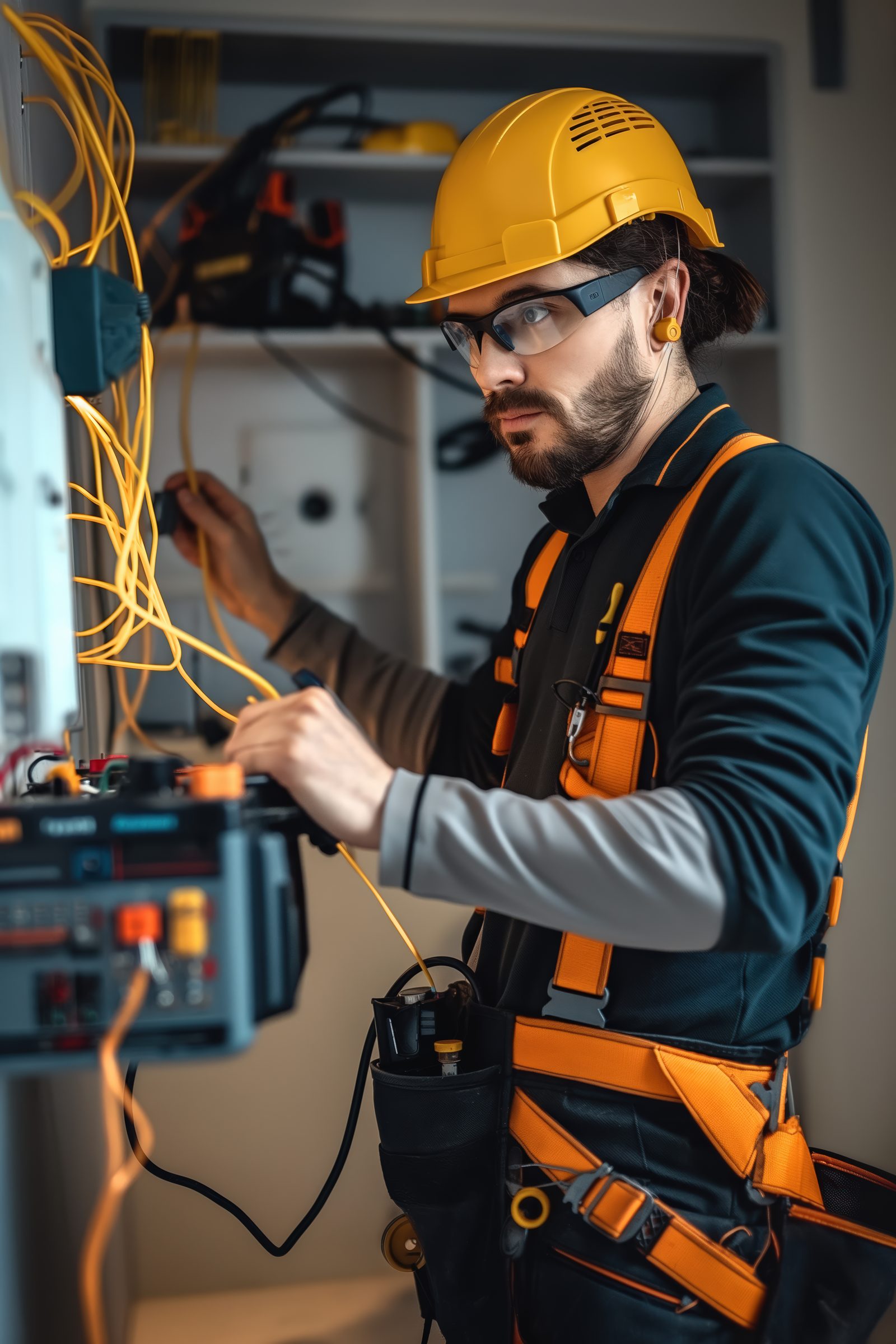
Electrical lockout/tagout (LOTO) is the procedure for physically securing every electrical energy source before anyone performs service or maintenance on equipment, preventing accidental energization that can cause shock, arc flash, severe burns, or death. Two federal standards govern it: OSHA 29 CFR 1910.147, which covers hazardous energy control across all energy types in general industry, and OSHA 29 CFR 1910.333, which addresses electrical equipment and utilization systems specifically. NFPA 70E-2027 layers on top of both, providing the technical verification steps and procedural detail that OSHA's baseline rules don't fully spell out.
Lockout vs. tagout: a lockout device physically holds an energy-isolating device in the off position using a keyed or combination lock. A tagout device is a warning tag fastened to the isolating device when a lock cannot be applied, and it must be supplemented by at least one additional safety measure. OSHA considers lockout more protective than tagout, and the standard requires lockout whenever the equipment is capable of being locked out.
Why electrical LOTO is non-negotiable for any facility:
- Unexpected energization is one of the leading causes of serious electrical injuries in U.S. workplaces
- Arc flash events can release extremely high temperatures, far hotter than the surface of the sun
- OSHA citations for LOTO violations consistently rank among the agency's most frequently issued
- A single missing lock during a multi-worker job can expose every person on the crew to lethal voltage
- Proper LOTO is the foundation of an electrically safe work condition as defined by NFPA 70E-2027
What hazardous electrical energy actually does to the human body
Hazardous electrical energy in a workplace context means any voltage, current, or stored charge capable of causing injury if released unexpectedly. That includes line voltage from a 480V motor control center, stored energy in capacitor banks, and even the residual charge in a large drive after the disconnect is opened. The hazard doesn't disappear the moment you flip a switch.
Direct contact with energized conductors causes electrical shock, which can disrupt heart rhythm, cause respiratory arrest, and produce deep internal burns along the current path. The severity depends on current magnitude, path through the body, and duration of contact. Even relatively low currents at the wrong frequency and path can be fatal.
Arc flash is a separate and often more destructive hazard. When a fault creates an uncontrolled arc between conductors, the resulting plasma can reach temperatures that vaporize copper and propel molten metal fragments at ballistic speeds. The pressure wave from an arc blast can knock workers off ladders or catapult them across a room. Burns from arc flash are typically full-thickness and cover large body surface areas, making them among the most difficult injuries to treat.
Indirect hazards from unexpected energization are easy to overlook. A motor that starts without warning can trap a hand in rotating machinery. A solenoid valve that opens unexpectedly can release pressurized fluid. Electrical energy is rarely the only hazard in play.
How OSHA regulates electrical lockout/tagout procedures
OSHA 29 CFR 1910.147 is the primary standard for hazardous energy control in general industry. It requires employers to establish a written energy control program, develop equipment-specific procedures, provide appropriate lockout and tagout devices, and train both authorized employees (those who perform LOTO) and affected employees (those who work in areas where LOTO is used). The standard also mandates periodic inspections of energy control procedures at least annually.
29 CFR 1910.333 picks up where 1910.147 leaves off for electrical work specifically. It requires that circuits and equipment be disconnected from all electrical energy sources before work begins, and that a lock and tag be placed on each disconnecting means. Control devices like push buttons and selector switches cannot serve as the sole means of deenergizing a circuit. Interlocks cannot substitute for LOTO.
NFPA 70E is an industry consensus standard, not a federal regulation, but OSHA recognizes compliance with it as an acceptable means of hazard abatement. Its 2027 edition provides the most technically detailed framework for establishing an electrically safe work condition, including specific verification steps that go beyond what either OSHA standard prescribes.
| Requirement | OSHA 29 CFR 1910.147 | OSHA 29 CFR 1910.333 | NFPA 70E-2027 |
|---|---|---|---|
| Written energy control program | Required | Required (may reference 1910.147) | Required |
| Equipment-specific procedures | Required | Required | Required |
| Employee training | Authorized and affected employees | Qualified persons | Qualified and unqualified persons |
| Periodic inspection | Annually by qualified person | Follows 1910.147 | Annually |
| Verification of de-energization | Required | Required | Six-step voltage absence test |
| Group/complex LOTO | Group lockout provisions | References 1910.147 | Detailed complex LOTO requirements |
Key employer obligations under these standards: develop and document written energy control procedures for each piece of equipment; provide lockout and tagout devices at no cost to employees; train authorized employees to recognize hazardous energy sources and apply control measures; train affected employees on the prohibition against restarting locked or tagged equipment; conduct annual audits of procedures and employee compliance; and retrain employees when there is reason to believe they don't understand the procedures.
What makes an electrical LOTO program actually work
A written procedure that sits in a binder and never gets updated is not a program. An effective electrical LOTO program is a living system with site-specific documentation, trained personnel, and a clear audit trail.
Procedures must be equipment-specific, developed using current drawings, and verified by a qualified person other than the one who wrote them. A procedure written for a motor control center that was modified two years ago without updating the one-line diagram is a liability, not a safeguard.
Every qualified employee exposed to hazardous electrical energy must apply their own individual lock and tag. The single-lock assumption, where one person locks out for the whole crew, is a fatal misconception. If five electricians are working on the same panel, five locks go on the hasp.
NFPA 70E-2027 distinguishes between simple and complex LOTO. Simple LOTO applies when a single authorized employee controls a single energy source. Complex LOTO applies when multiple energy sources, multiple crews, or multiple locations are involved. Complex jobs require a written action plan, group lockout devices, a designated coordinator, and a system to account for every exposed worker. Misclassifying a complex job as simple is one of the most common and dangerous errors in the field.
Core components of a complete electrical LOTO program:
- Written energy control program: facility-wide policy covering scope, rules, and responsibilities
- Equipment-specific procedures: step-by-step instructions for each machine or system, verified against actual equipment
- Device inventory: locks, hasps, tags, lockout stations, and multi-lock hasps maintained and assigned individually
- Training records: documentation of initial and refresher training for every authorized and affected employee
- Annual audit: documented review of procedures and observed employee performance by a qualified person
- Shift change protocol: group lockout devices or formal transfer of locks between outgoing and incoming crews
Field-verify new procedures before they go into use
When developing a new LOTO procedure, have a second qualified person physically walk down the equipment with the draft procedure in hand before it goes into use. Drawings are frequently out of date, and a field verification step catches discrepancies before they become incidents.
Step-by-step electrical LOTO best practices for the field
The sequence matters. Skipping or reordering steps is where incidents happen.
- Identify all energy sources. Before touching anything, review the equipment-specific procedure and confirm every electrical energy source, including primary feeds, control power, and stored energy in capacitors or drives. Don't rely on memory.
- Notify affected employees. Anyone working in the area needs to know the equipment is being taken out of service. This isn't a courtesy; it's an OSHA requirement.
- Shut down the equipment. Use the normal stopping procedure for the machine. Verify it has stopped completely before proceeding.
- Isolate all energy sources. Open every disconnecting means identified in the procedure. Control circuit devices like push buttons cannot be the sole means of isolation under 29 CFR 1910.333.
- Apply locks and tags. Each authorized employee applies their own lock to every isolating device. Tags go on simultaneously. Tags must include a clear prohibition statement such as "Do Not Energize."
- Release or restrain stored energy. Discharge capacitors, bleed down drives, and address any other stored energy that could reach a hazardous level after isolation.
- Verify absence of voltage. This is the step most often rushed. NFPA 70E's six-step verification process requires testing each phase conductor with a known-good voltage tester, verifying the tester before and after use, and grounding conductors when required. A visual check of the disconnect position is not verification.
- Perform the work. Only after voltage absence is confirmed does work begin.
- Restore the equipment. Remove tools and materials, reinstall guards, notify affected employees, remove locks and tags in reverse order, and restore energy only after all personnel are clear.
Additional best practices that separate compliant programs from genuinely safe ones:
- Use only OSHA-compliant lockout devices: locks must be key-unique, durable, and used exclusively for LOTO
- Tagout devices must be non-reusable, self-locking, non-releasable, and rated for a minimum 50-pound unlocking strength
- For shift changes, use a group lockout hasp or a formal documented transfer; never leave a job protected only by a single lock that the next crew didn't apply
- Treat any conductor that hasn't been verified as de-energized as energized, regardless of what the procedure says
- When multiple trades are on the same job, assign a LOTO coordinator and use a group hasp with individual locks from every crew member
Where to find authoritative resources for electrical LOTO compliance
Getting LOTO right requires more than reading the regulation once. The standards evolve, equipment changes, and programs need regular review against current requirements.
OSHA primary sources: OSHA 29 CFR 1910.147 (the full text of the hazardous energy control standard), OSHA's Lockout/Tagout Fact Sheet (a plain-language summary available at osha.gov), and OSHA's LOTO eTool (an interactive web resource covering program development, device selection, and compliance checklists).
NFPA 70E-2027: the current edition is the most technically detailed resource available for electrical safety in the workplace. It covers electrically safe work condition verification, PPE selection, arc flash risk assessment, and both simple and complex LOTO requirements. Purchase directly from NFPA.
No document replaces hands-on training with qualified instructors. Authorized employees need to demonstrate they can recognize hazardous energy sources, apply LOTO devices correctly, and verify voltage absence using proper test equipment. Annual LOTO program audits must be conducted by a qualified person who observes each authorized employee performing the procedure.
Key Takeaways
| Point | Details |
|---|---|
| Two governing OSHA standards | 29 CFR 1910.147 covers all hazardous energy; 29 CFR 1910.333 addresses electrical equipment specifically. |
| Individual locks are mandatory | Every authorized employee exposed to hazardous electrical energy must apply their own lock and tag. |
| Simple vs. complex LOTO | Multi-source, multi-crew, or multi-location jobs require a written plan, group devices, and a designated coordinator under NFPA 70E-2027. |
| Voltage absence must be verified | A visual check of the disconnect is not sufficient; NFPA 70E requires a six-step test using a known-good voltage tester on each phase conductor. |